

Description
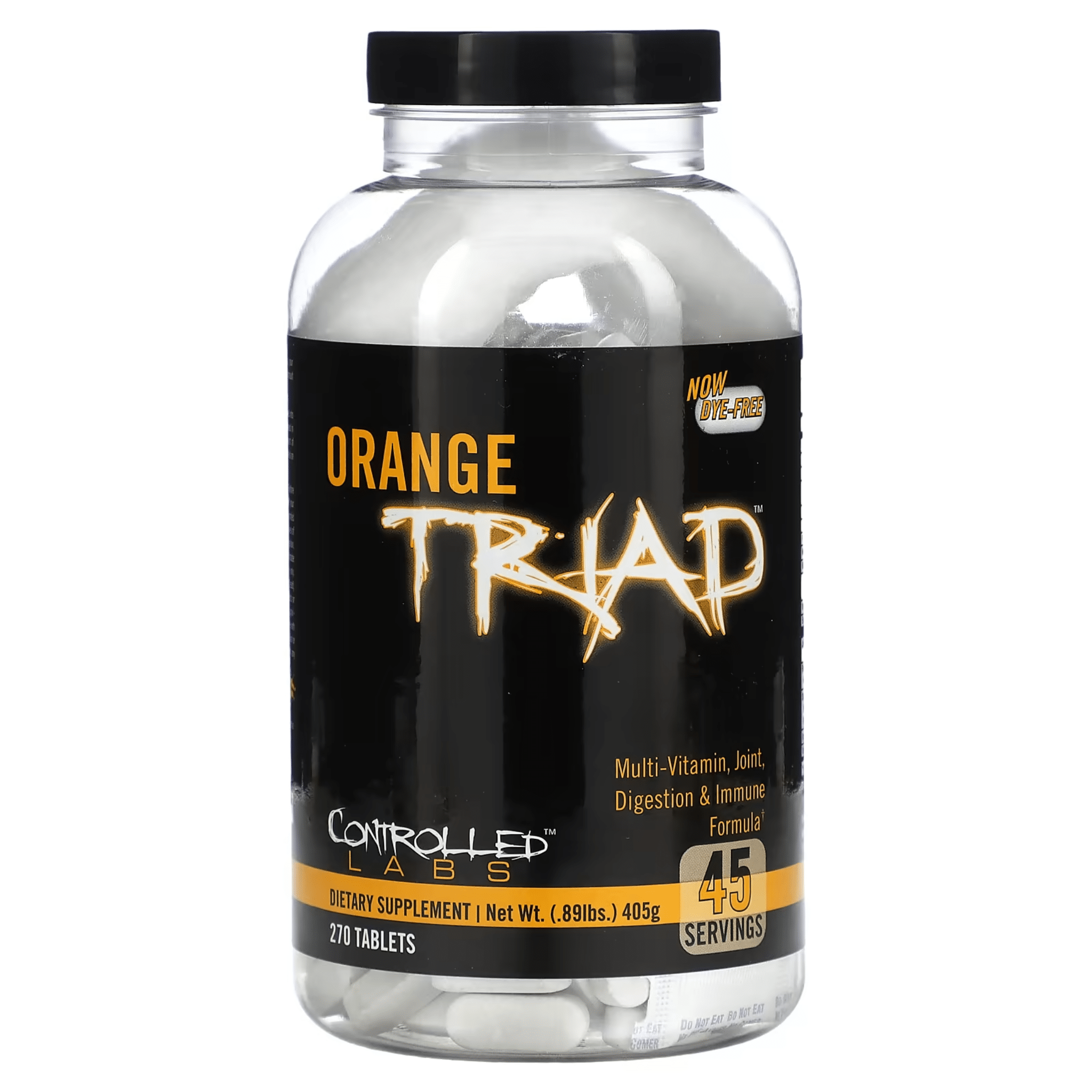
Controlled Labs Orange Triad
A multivitamin combining micronutrients, joint support and digestive enzymes in one product — the "triad" of the name.
The appeal, and the honest caveat
Combining three categories is genuinely convenient. It is also where you should look hardest at the label.
The convenience is real: one product instead of three, one thing to remember, and generally cheaper than buying separately.
⚠ The caveat is dosing. Joint support ingredients have researched doses measured in grams:
| Glucosamine | 1,500mg daily |
| Chondroitin | 1,200mg daily |
| MSM | 1,500–3,000mg daily |
Those are large amounts. A combined product has to fit them alongside a full vitamin and mineral profile plus enzymes — which is exactly why Orange Triad is a multi-tablet serving rather than a one-a-day.
Check the panel against those figures. If the joint doses reach researched levels, the combination is genuinely good value. If they sit well below, you are getting a multivitamin with joint ingredients mentioned on it — which is a different proposition, and you may still want a dedicated joint product.
Our staff earn no commission, and this is the check we would run with you at the counter.
Why athletes have elevated micronutrient requirements
- Sweat losses — zinc, magnesium, sodium, potassium and several B vitamins
- Elevated metabolic turnover. B vitamins are cofactors in energy release pathways
- Oxidative stress rising with training volume
- Restricted dieting, where micronutrient intake falls with calories but demand does not
- Repetitive eating, which narrows the nutrient range
On the joint side — realistic expectations
Worth being straight about, because joint products are bought in hope.
The evidence for glucosamine and chondroitin is genuinely mixed. Some trials show meaningful benefit for joint discomfort, others show little beyond placebo. It appears to help some people considerably and others not at all, and there is no way to know in advance which you are.
Two practical points:
- Give it three to six months. These are slow-acting ingredients — judging them after three weeks tells you nothing
- ⚠ Joint supplements do not fix injuries. Persistent pain that limits your training needs a physiotherapist. Masking discomfort while continuing to load damaged tissue makes things worse, and cartilage has no direct blood supply, which is why it heals so poorly
⚠ Count your totals
Three nutrients stack up unintentionally across products:
- Zinc — the ceiling from all sources is around 40mg daily, and sustained excess drives down copper
- Vitamin B6 — the one B vitamin with a genuine upper limit, since sustained high doses can cause peripheral neuropathy
- Vitamin D — fat-soluble and stored rather than excreted
⚠ And a shellfish note: glucosamine is commonly derived from shellfish. The allergen is in the flesh rather than the shell, so most people with shellfish allergy tolerate it — but if you are allergic, check the source or choose a vegetarian glucosamine.
Specs
| Format | Multi-tablet daily serving |
| Covers | Vitamins, minerals, joint support, digestive enzymes |
| ⚠ Check | Joint doses against researched amounts |
How to take it
- With food — the fat-soluble vitamins need it, and food prevents nausea from multiple tablets.
- Split across two meals rather than all at once.
- ⚠ Not alongside coffee or tea, which reduce mineral absorption.
- Consistently for three to six months if joints are your reason for buying.
- Expect bright yellow urine — that is riboflavin, and it is harmless.
Who this is for
- Anyone who wants a multivitamin and joint support without buying both
- Lifters with accumulated joint wear
- People training at high volume
- Anyone dieting, where micronutrient intake falls with calories
- People who would rather take one product than three
Who this is not for
Anyone needing full-dose joint support, if the panel falls short. A dedicated joint product delivers researched doses.
Anyone eating a varied diet with healthy joints. The incremental benefit is modest.
Anyone already taking several individual vitamins, without adding up totals first.
Anyone with a genuine injury. See a physiotherapist — a supplement will not substitute.
Anyone with a shellfish allergy, without checking the glucosamine source.
Anyone on warfarin, given the vitamin K content.
Not for anyone under 18, pregnant or nursing without medical advice.
Stack it with: fish oil, which supports joints by a different mechanism and is not covered here.
Frequently asked questions
Are the joint doses high enough?
Check the panel against the researched amounts — glucosamine at 1,500mg, chondroitin at 1,200mg, MSM at 1,500 to 3,000mg. If they fall short, you may still want a dedicated joint product.
Why is it multiple tablets?
Joint ingredients have gram-level doses, which cannot fit into one tablet alongside a full vitamin and mineral profile.
Does glucosamine work?
The evidence is mixed — it helps some people considerably and others not at all, and there is no way to know in advance which you are.
How long before joints improve?
Three to six months. These are slow-acting ingredients.
Can I take it with a shellfish allergy?
The allergen is in the flesh rather than the shell, so most people tolerate it — but check the source or choose vegetarian glucosamine.
What should I check for overlap?
Zinc, vitamin B6 and vitamin D across all your products.
Will it fix my joint pain?
Persistent pain limiting your training needs a physiotherapist. Masking discomfort while loading damaged tissue makes things worse.
Why is my urine bright yellow?
Riboflavin. Harmless.
Controlled Labs Orange Triad
You may also like
Recently viewed
- Opens in a new window.