
Description
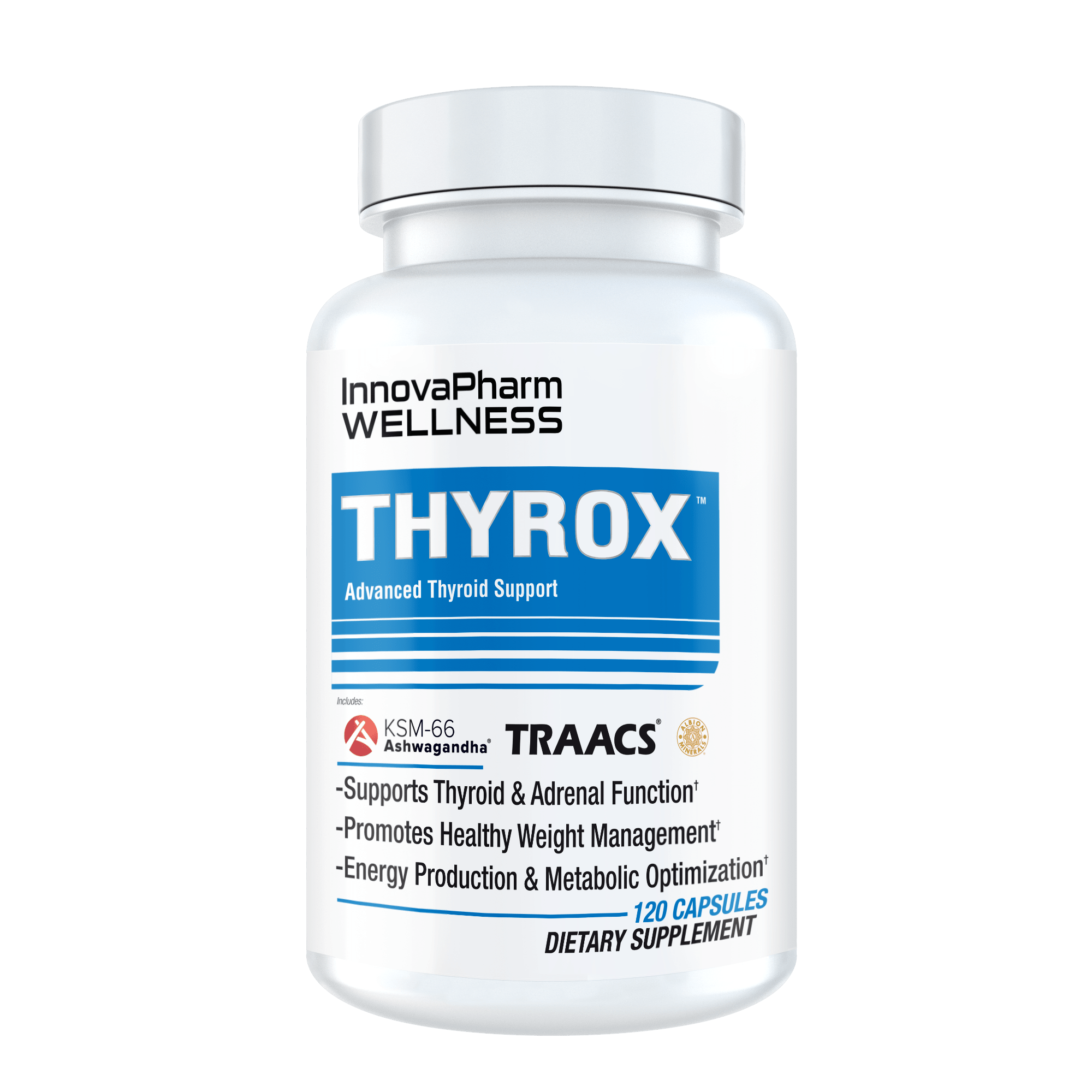
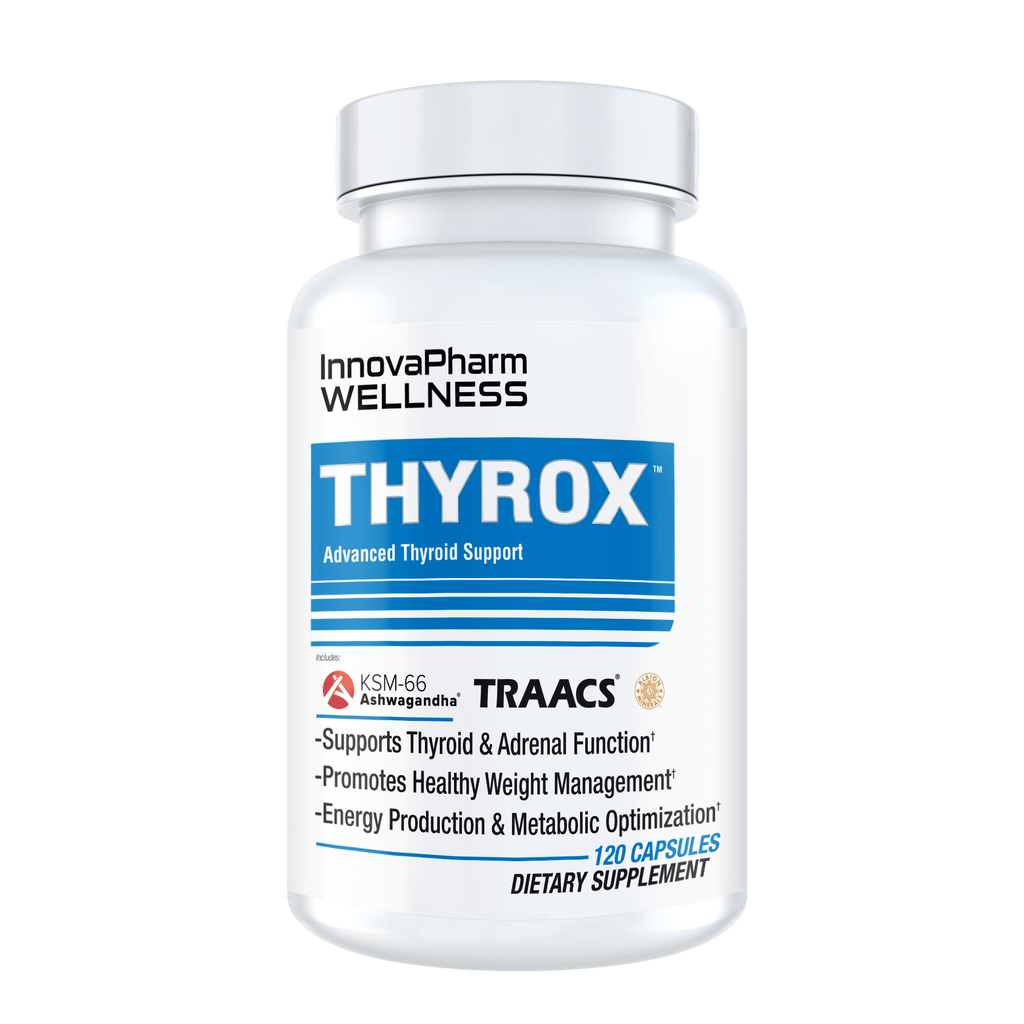
InnovaPharm Thyrox
A thyroid support formula aimed at people dieting, where metabolic adaptation is a genuine and measurable phenomenon.
⚠ Read the cautions first. Thyroid function is genuinely medical territory, and this is a product where "check with your doctor" is not a formality.
Why thyroid comes up when dieting
This is real physiology rather than marketing, and it explains why the category exists.
Your thyroid sets your metabolic rate. It produces mainly T4 (thyroxine), which is relatively inactive, and that T4 is converted in peripheral tissues into T3 (triiodothyronine), which is the active hormone doing the work.
When you diet, that conversion changes. Prolonged caloric restriction reduces T4-to-T3 conversion and increases conversion to reverse T3 — an inactive form that occupies the same receptors without activating them.
This is an adaptive response, not a malfunction. Your body is reducing energy expenditure in response to reduced energy intake, which is exactly what it evolved to do during food scarcity.
The practical consequence is the frustrating part of any long diet: your metabolic rate drops, weight loss slows, you feel cold and flat, and the deficit that was working stops working. That is metabolic adaptation, and it is well documented.
What thyroid support formulas typically contain
- Iodine — the raw material for thyroid hormone. Every molecule of T4 contains four iodine atoms, T3 contains three. Without iodine you cannot make either
- Selenium — arguably the most important one here. The enzymes that convert T4 into active T3 are selenoproteins, meaning selenium is genuinely required for that conversion step
- Zinc — involved in thyroid hormone synthesis and receptor function
- Tyrosine — the amino acid backbone of thyroid hormone, combined with iodine to build it
- Guggulsterones, ashwagandha and similar botanicals, which have traditional and preliminary research support
The nutrient side of that list is the well-supported part. Iodine, selenium and zinc are genuinely required for thyroid hormone production and conversion — and if you are short of any of them, correcting that has a real effect. The botanical side is considerably more speculative.
⚠ Three cautions that genuinely matter
1. If you have a diagnosed thyroid condition, do not use this without your doctor. Hypothyroidism, hyperthyroidism and Hashimoto's are all managed medically, and thyroid medication is dosed precisely. Adding iodine or a support formula on top can interfere with that — and in some conditions, additional iodine makes things worse rather than better.
2. Iodine is not a case of more being better. Both deficiency and excess cause thyroid dysfunction, and the safe range is narrower than most nutrients. Excessive iodine can trigger or worsen thyroid problems, particularly in anyone with underlying autoimmune thyroid disease. Count iodine from all sources — multivitamins, kelp products and iodised salt.
3. Symptoms of low thyroid overlap heavily with symptoms of dieting. Fatigue, feeling cold, low mood, poor recovery, hair thinning and constipation appear in both. That overlap is exactly why this needs a blood test rather than guesswork. If you genuinely have hypothyroidism, a supplement is not the answer and delaying diagnosis is not harmless.
What to test: TSH, free T4 and free T3 as a minimum. Reverse T3 and thyroid antibodies are worth adding if symptoms persist.
⚠ And note: if you take biotin, stop it 48 to 72 hours before any thyroid blood test. Biotin interferes with thyroid immunoassays and can produce results that mimic hyperthyroidism — people have been misdiagnosed on that basis.
What actually protects metabolic rate while dieting
None of these are in a bottle, and all of them matter more.
- Do not diet too aggressively. A moderate deficit produces less adaptation than an extreme one, and is far more sustainable
- Keep protein high — it preserves lean mass, and lean mass is what burns calories
- Keep resistance training in. Losing muscle lowers your metabolic rate directly
- Take diet breaks. Periodic maintenance periods allow some recovery of the adaptive response
- Watch total activity. Much of metabolic adaptation is a spontaneous reduction in everyday movement, which happens without you noticing
- Sleep, which affects hormonal regulation broadly
Specs
| Formula | Multi-ingredient thyroid support |
| Stimulants | None |
| Label | Fully disclosed, no proprietary blends |
| ⚠ Check | Iodine content against all your other sources |
How to take it
- Follow the label, with food.
- ⚠ Away from thyroid medication if you take any — minerals interfere with levothyroxine absorption, and four hours' separation is the usual guidance. But speak to your doctor before combining them at all.
- Alongside a sensible deficit, not as permission for an aggressive one.
- For the duration of a diet phase rather than indefinitely.
- Count iodine and selenium from your multivitamin.
Who this is for
- Anyone in a prolonged dieting phase where progress has stalled
- Competitors in the later stages of a prep
- People whose diet is genuinely low in iodine and selenium sources
- Anyone who wants nutrient support for thyroid function rather than a stimulant
Who this is not for
⚠ Anyone with a diagnosed thyroid condition, or taking thyroid medication, without their doctor's input. This is the most important line on the page.
Anyone with symptoms who has not been tested. Low thyroid symptoms and dieting symptoms overlap almost completely, and delaying a diagnosis is not harmless.
Anyone already taking iodine or kelp. Excess iodine causes thyroid dysfunction just as deficiency does.
Anyone with an autoimmune thyroid condition, where additional iodine can worsen things.
Anyone expecting it to override an inadequate deficit. It supports thyroid function; it does not create a calorie deficit.
Not for anyone under 18, pregnant or nursing — iodine requirements change in pregnancy and should be managed medically.
Stack it with: nothing containing additional iodine. Zinc and vitamin D are fine if you are not already covered.
Frequently asked questions
Why does dieting affect the thyroid?
Prolonged caloric restriction reduces conversion of T4 into active T3 and increases conversion to inactive reverse T3. It is an adaptive response to reduced energy intake, not a malfunction.
What is reverse T3?
An inactive form of thyroid hormone that occupies the same receptors without activating them. Conversion toward it increases during prolonged dieting.
Why is selenium important?
The enzymes converting T4 into active T3 are selenoproteins, so selenium is genuinely required for that conversion step.
Can I take it with thyroid medication?
Not without your doctor. Thyroid medication is dosed precisely, and minerals interfere with levothyroxine absorption.
Is more iodine better?
No. Both deficiency and excess cause thyroid dysfunction, and the safe range is narrower than for most nutrients. Count all your sources.
How do I know if my thyroid is the problem?
A blood test — TSH, free T4 and free T3 at minimum. Low thyroid symptoms overlap almost completely with dieting symptoms, so guessing is unreliable.
Should I stop biotin before a thyroid test?
Yes, 48 to 72 hours beforehand. Biotin interferes with thyroid immunoassays and can produce results mimicking hyperthyroidism.
What protects metabolic rate best?
Not dieting too aggressively, keeping protein high, maintaining resistance training, taking diet breaks, watching daily activity, and sleep.
You may also like
Recently viewed
- Opens in a new window.