
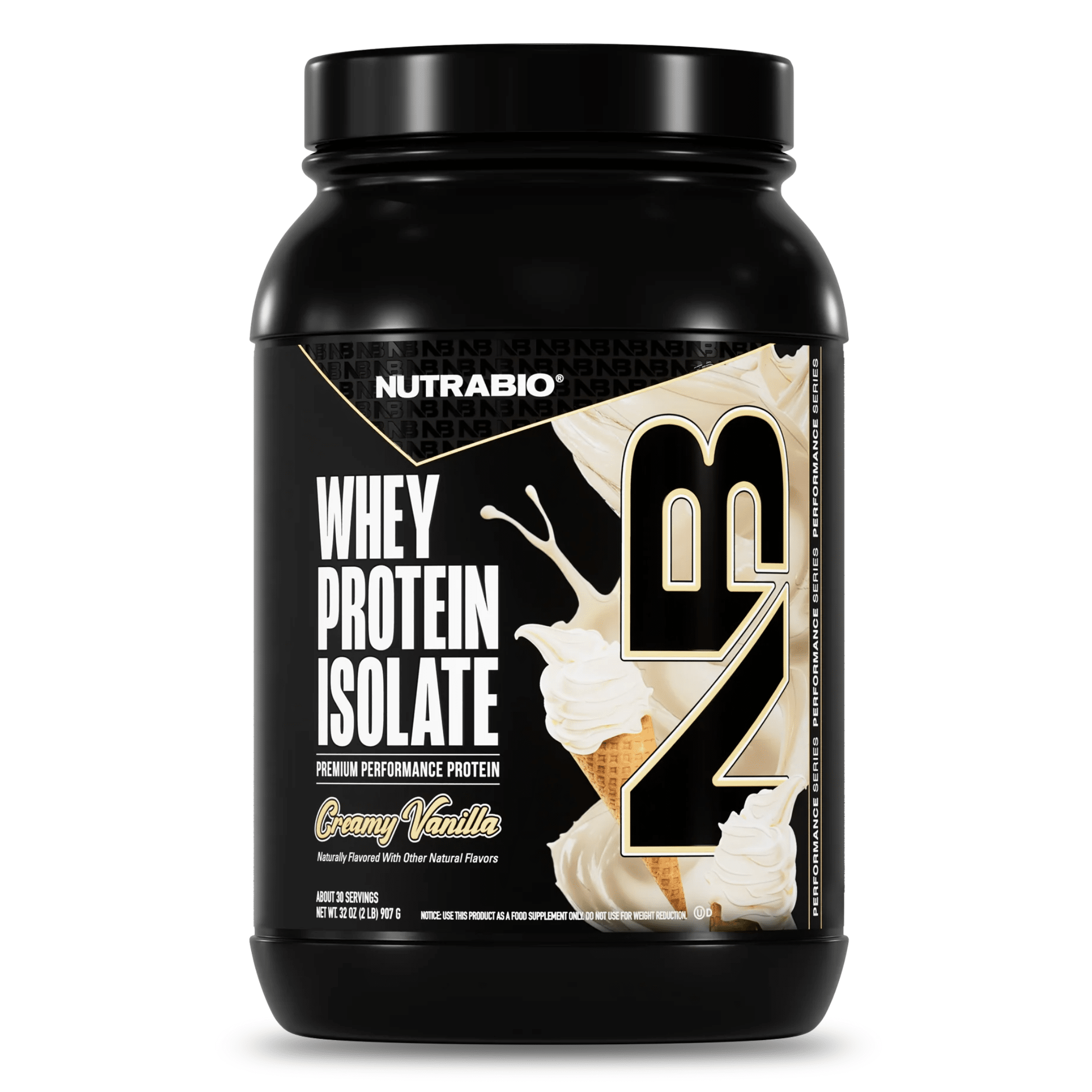
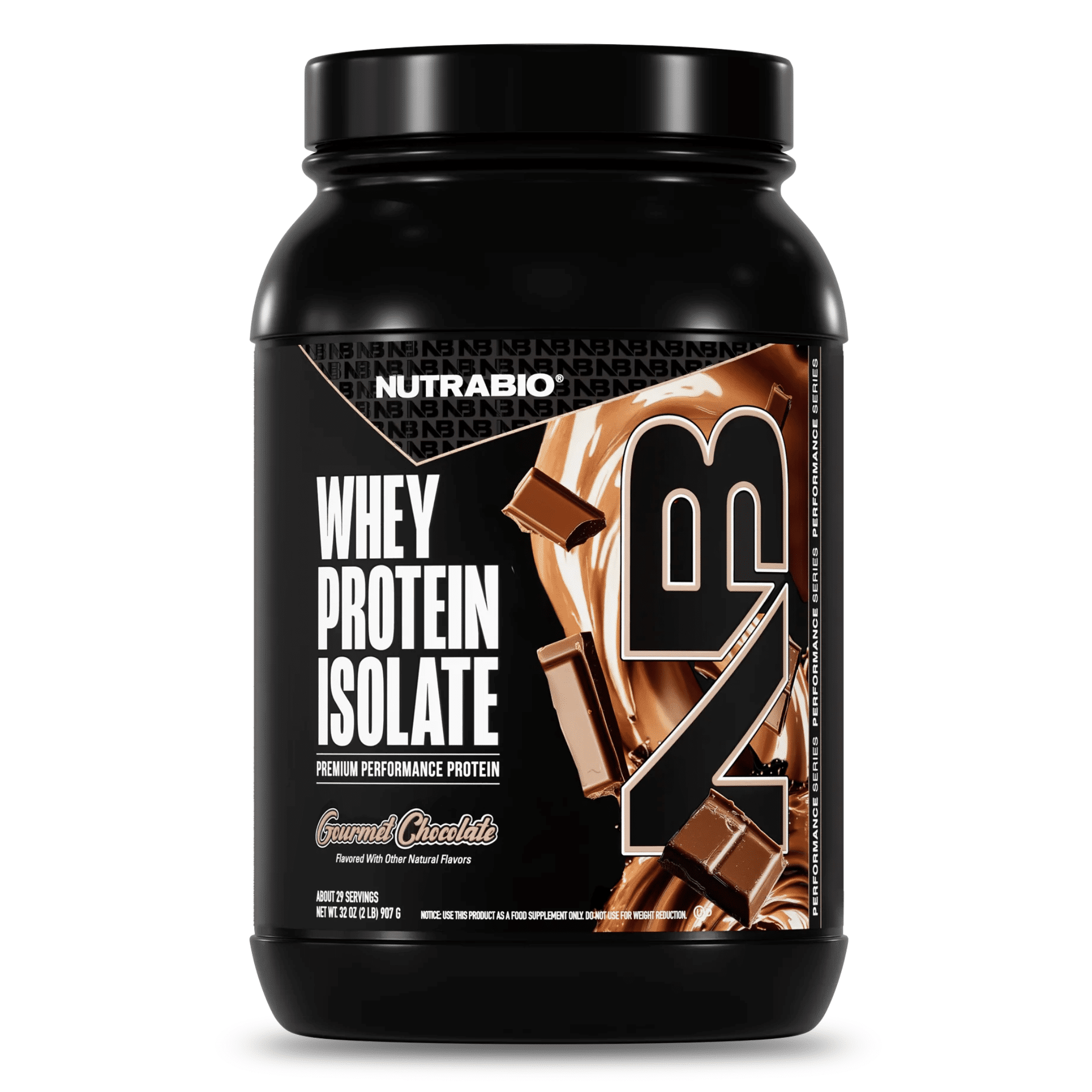
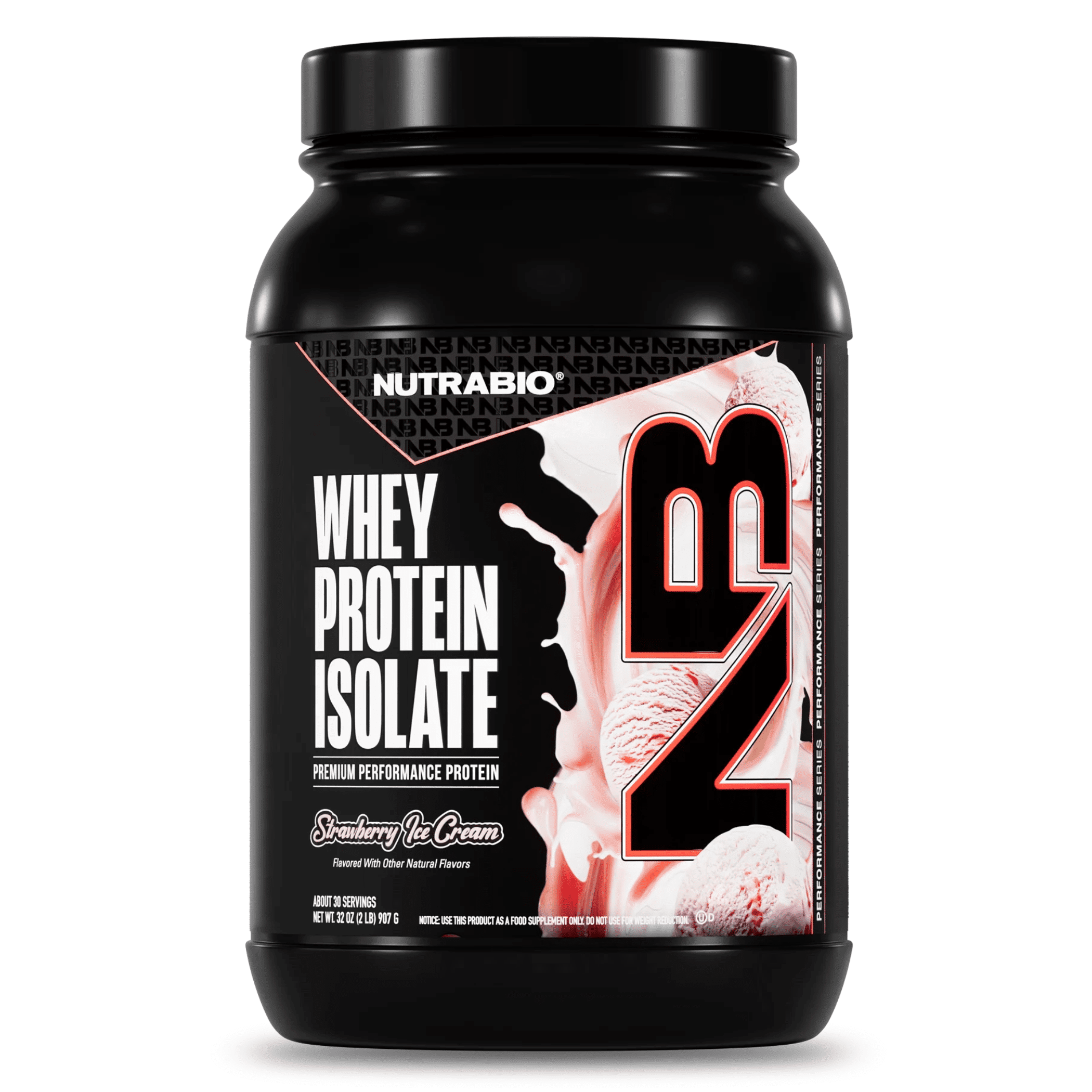

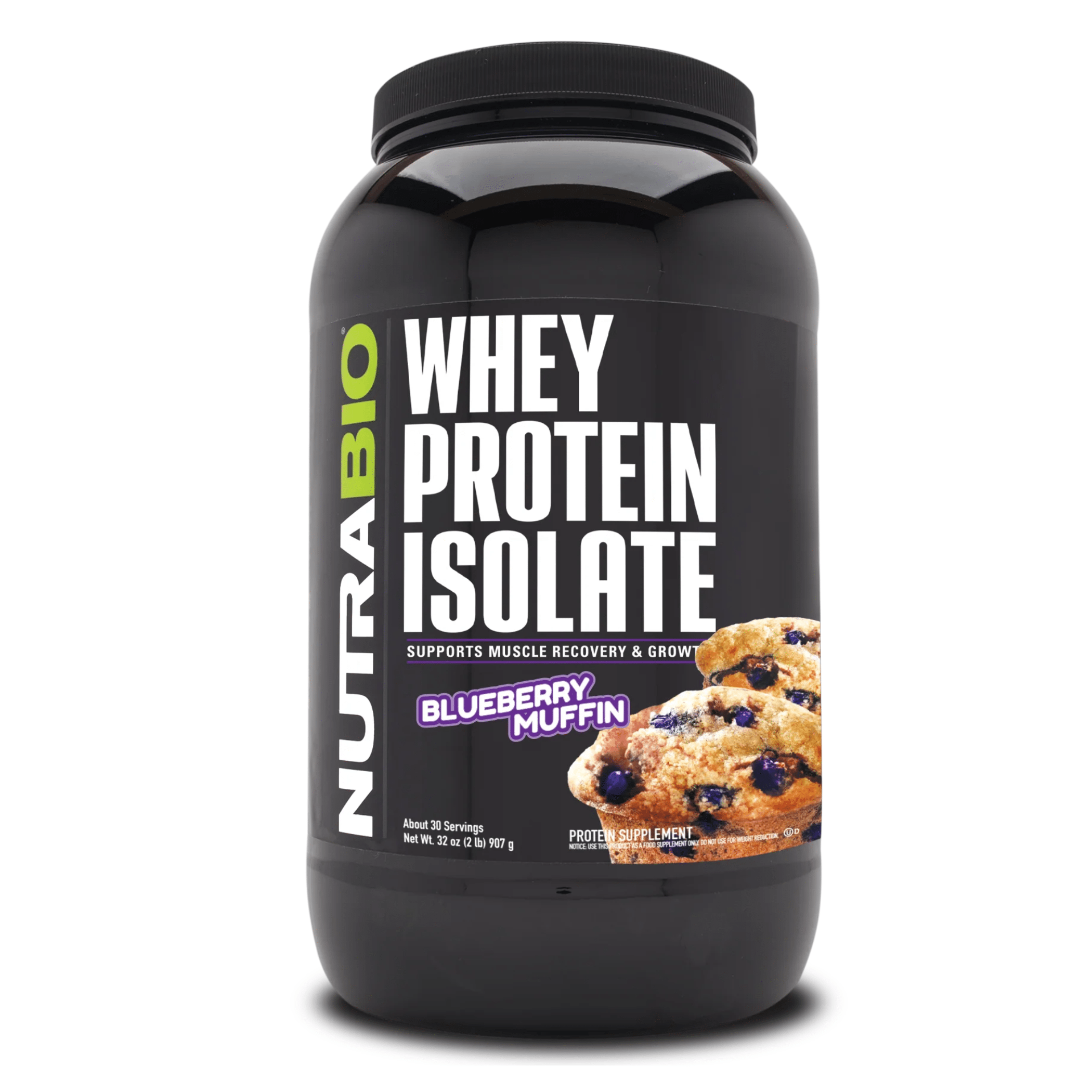

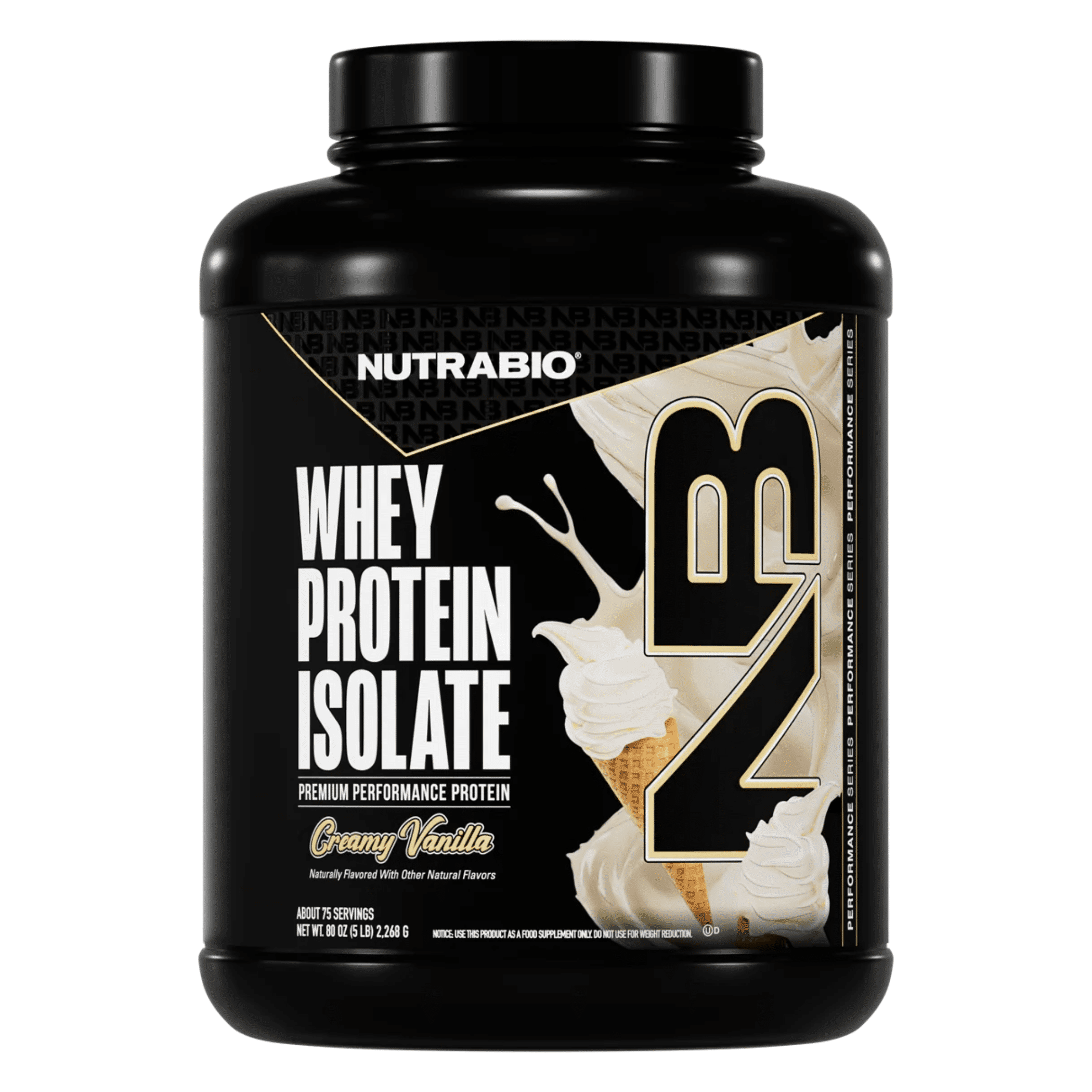
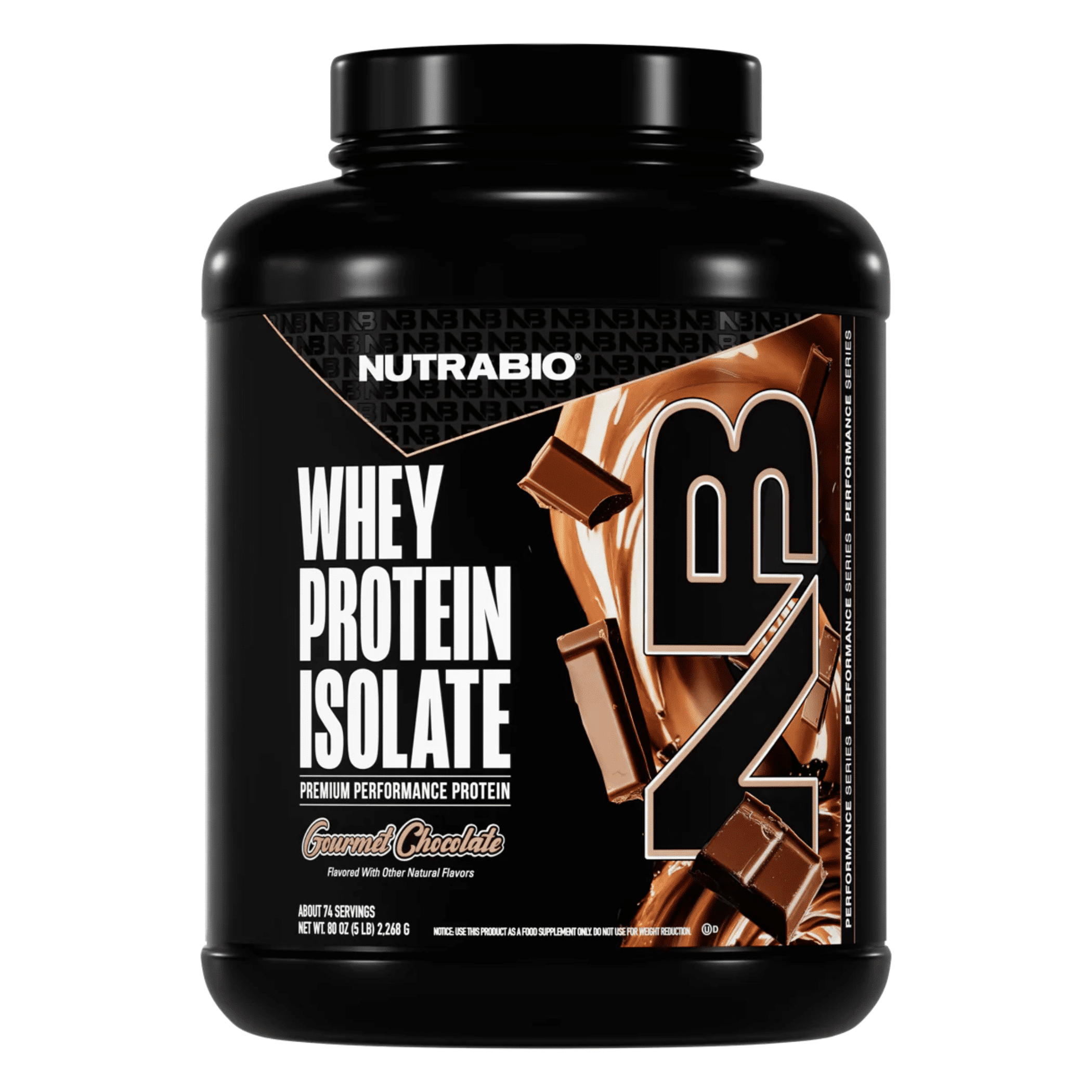
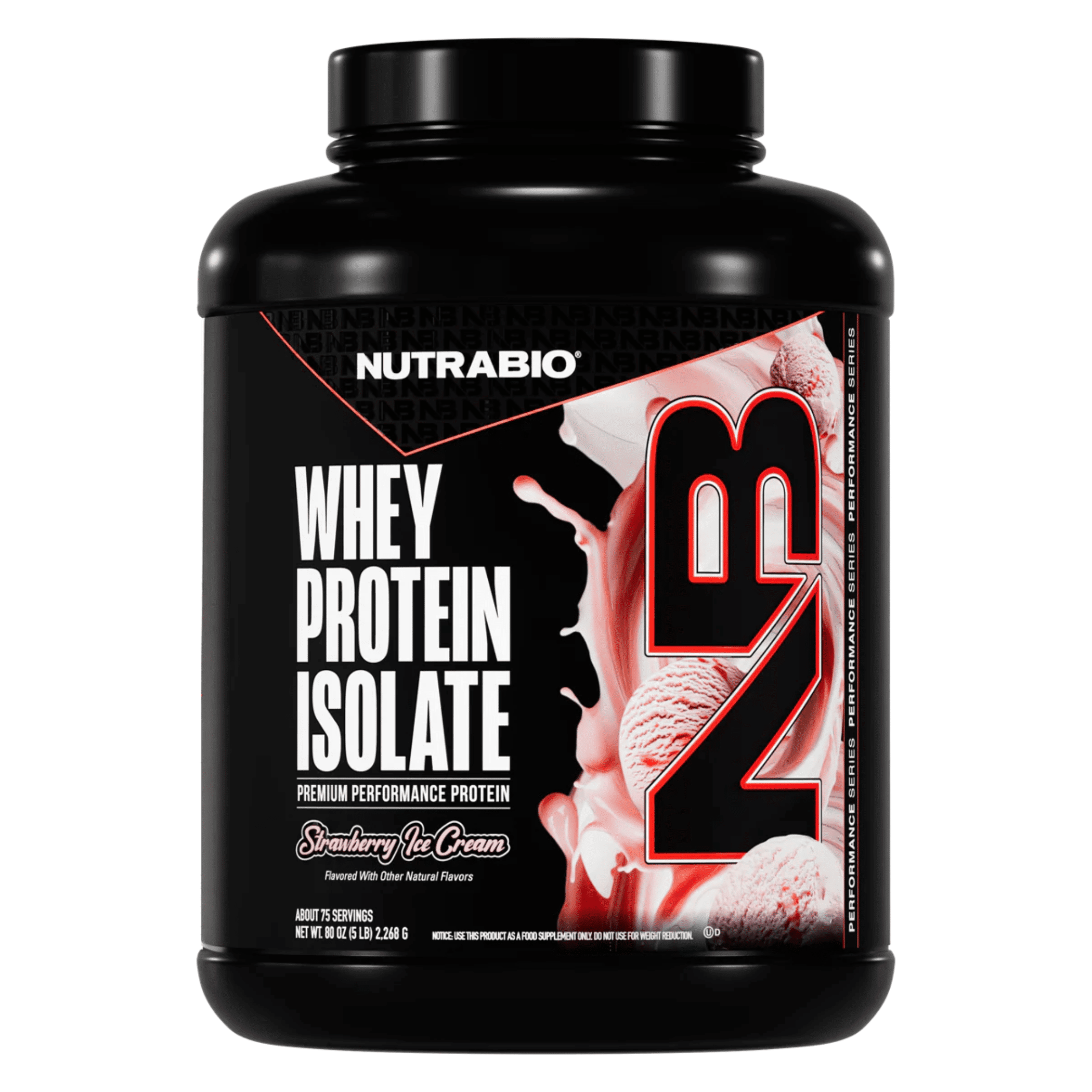
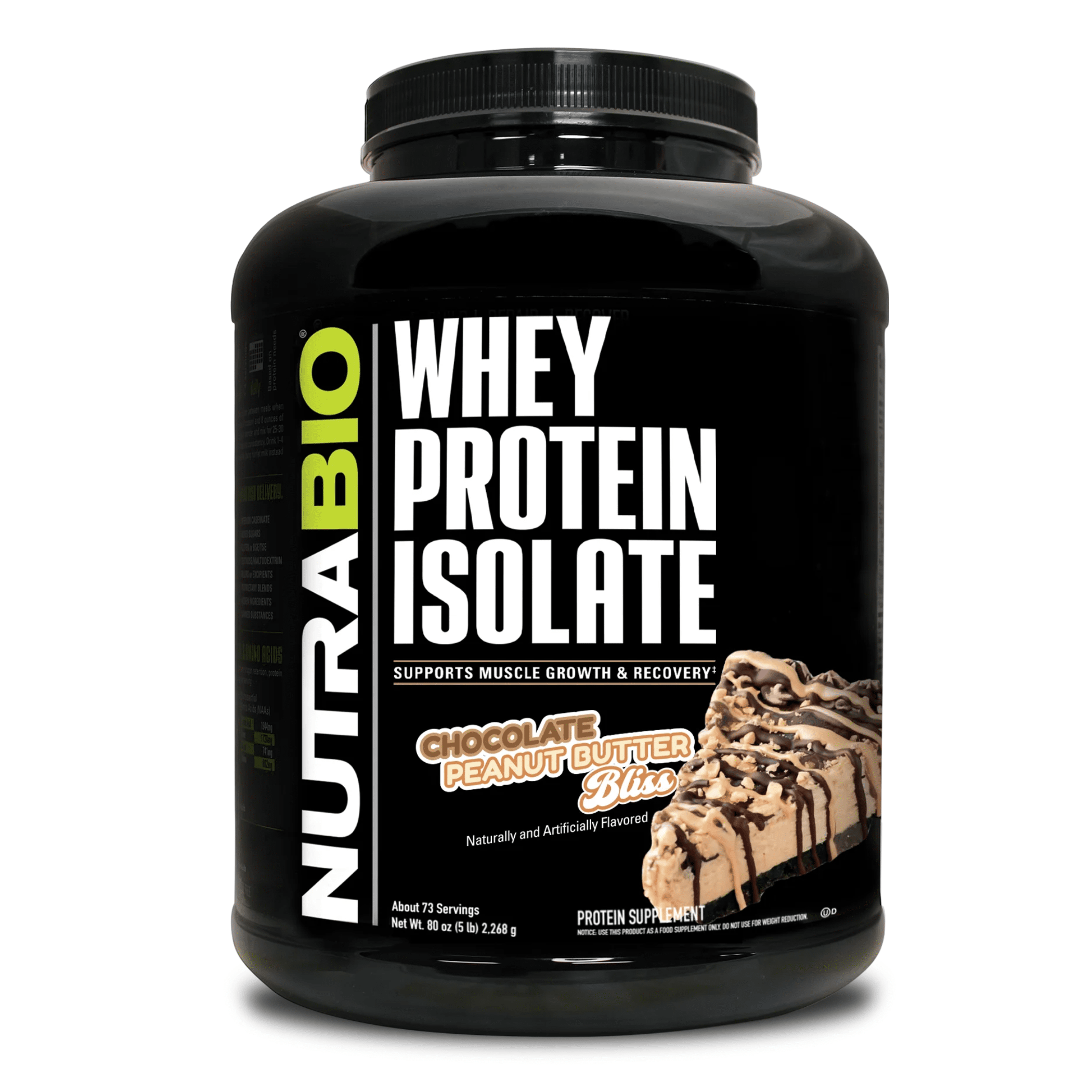
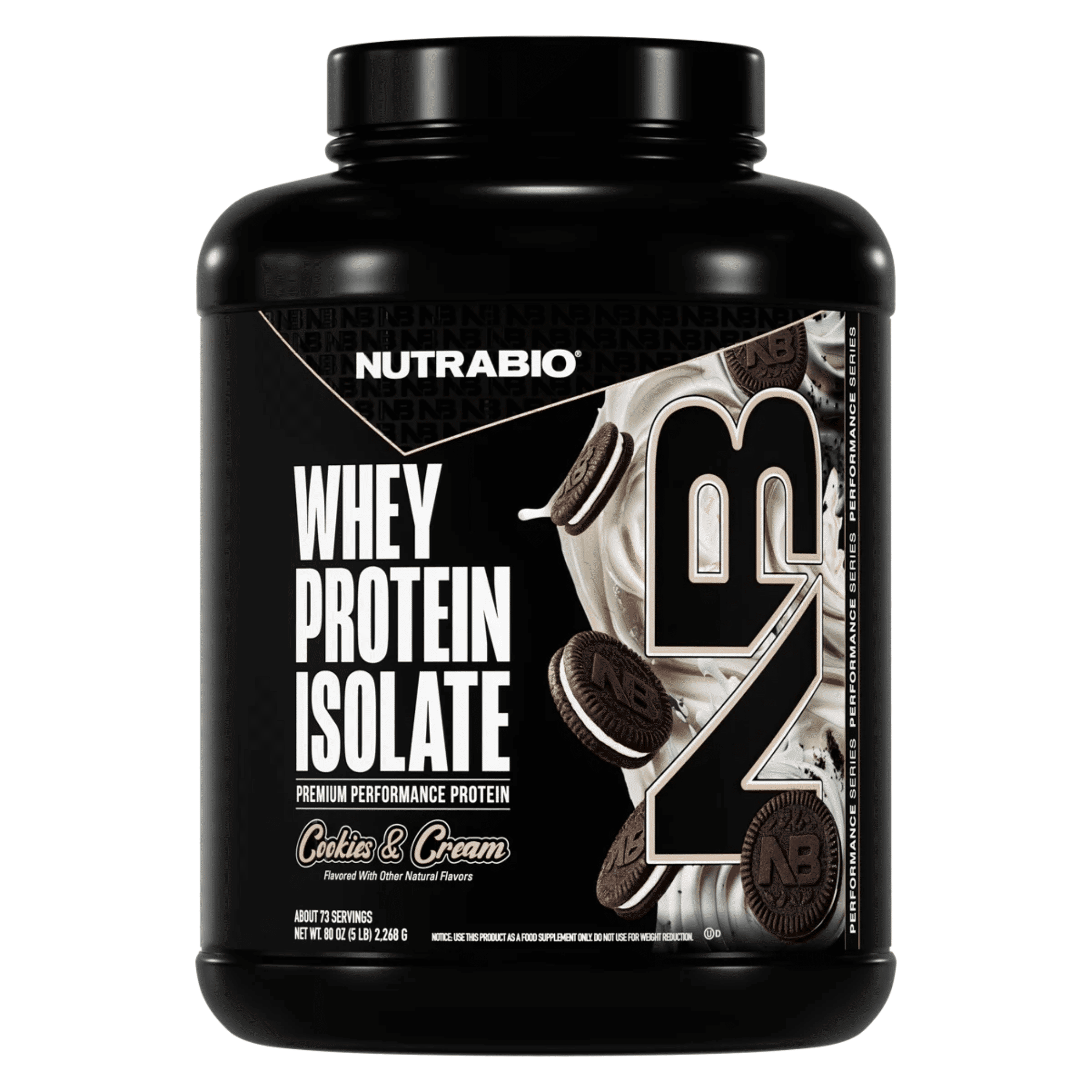
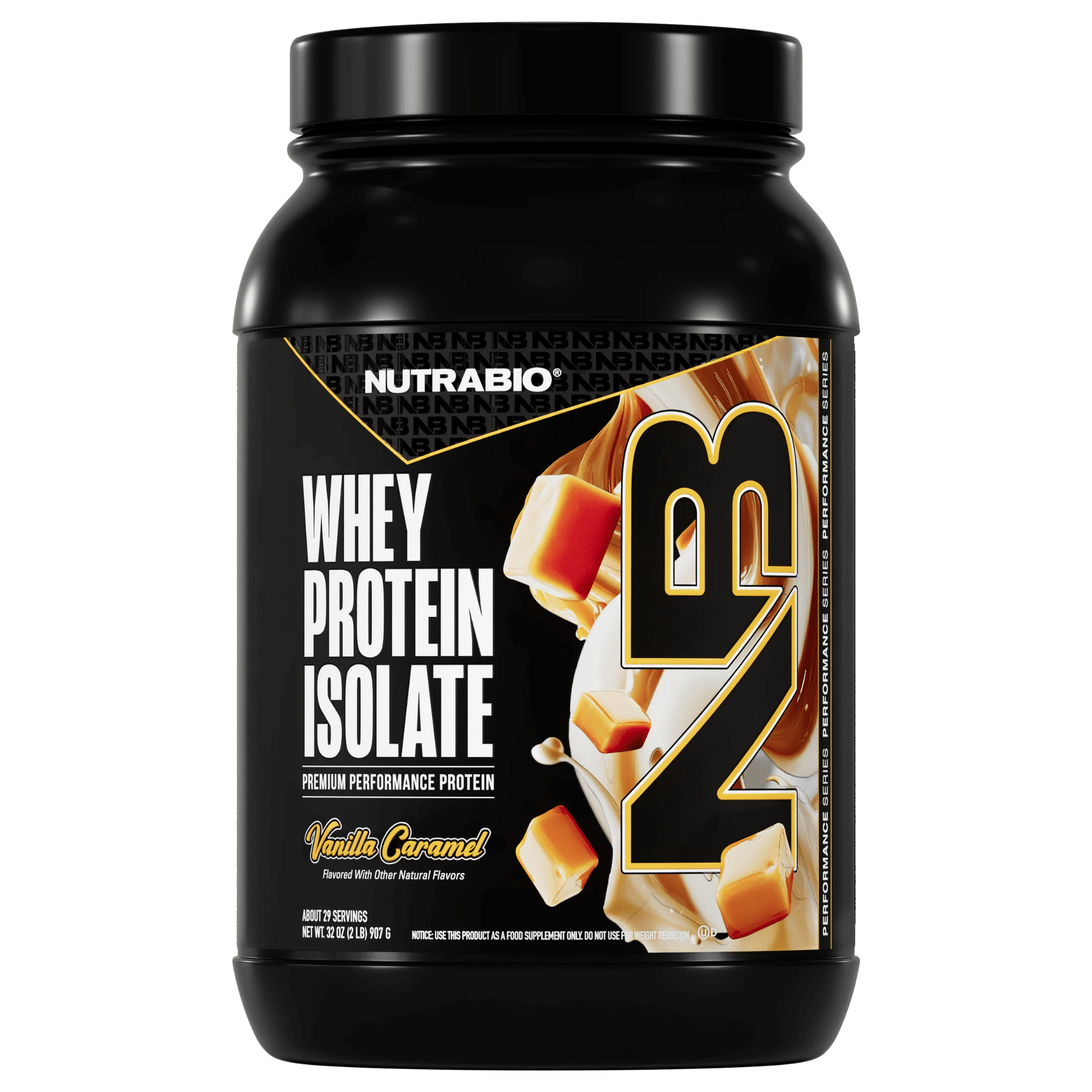
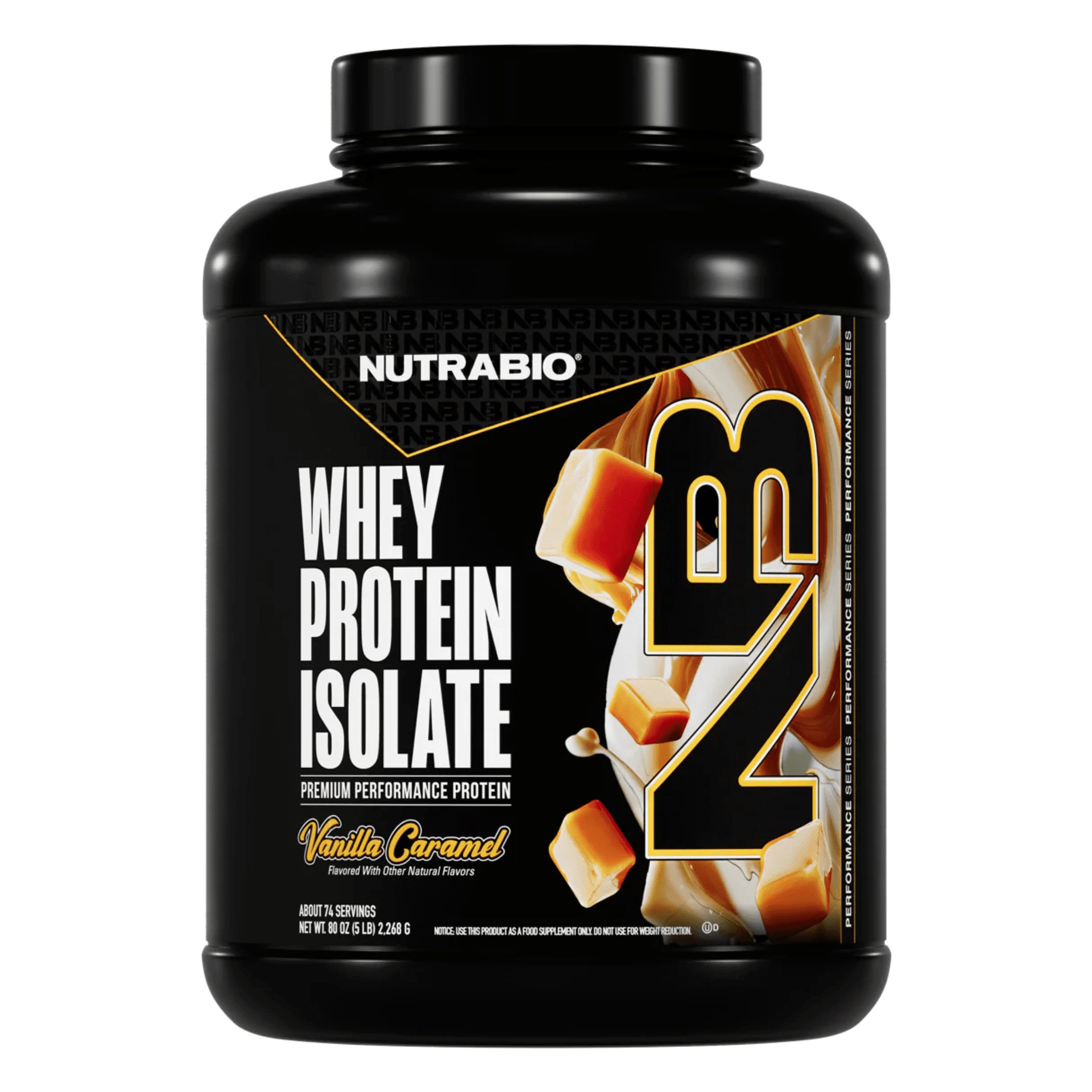

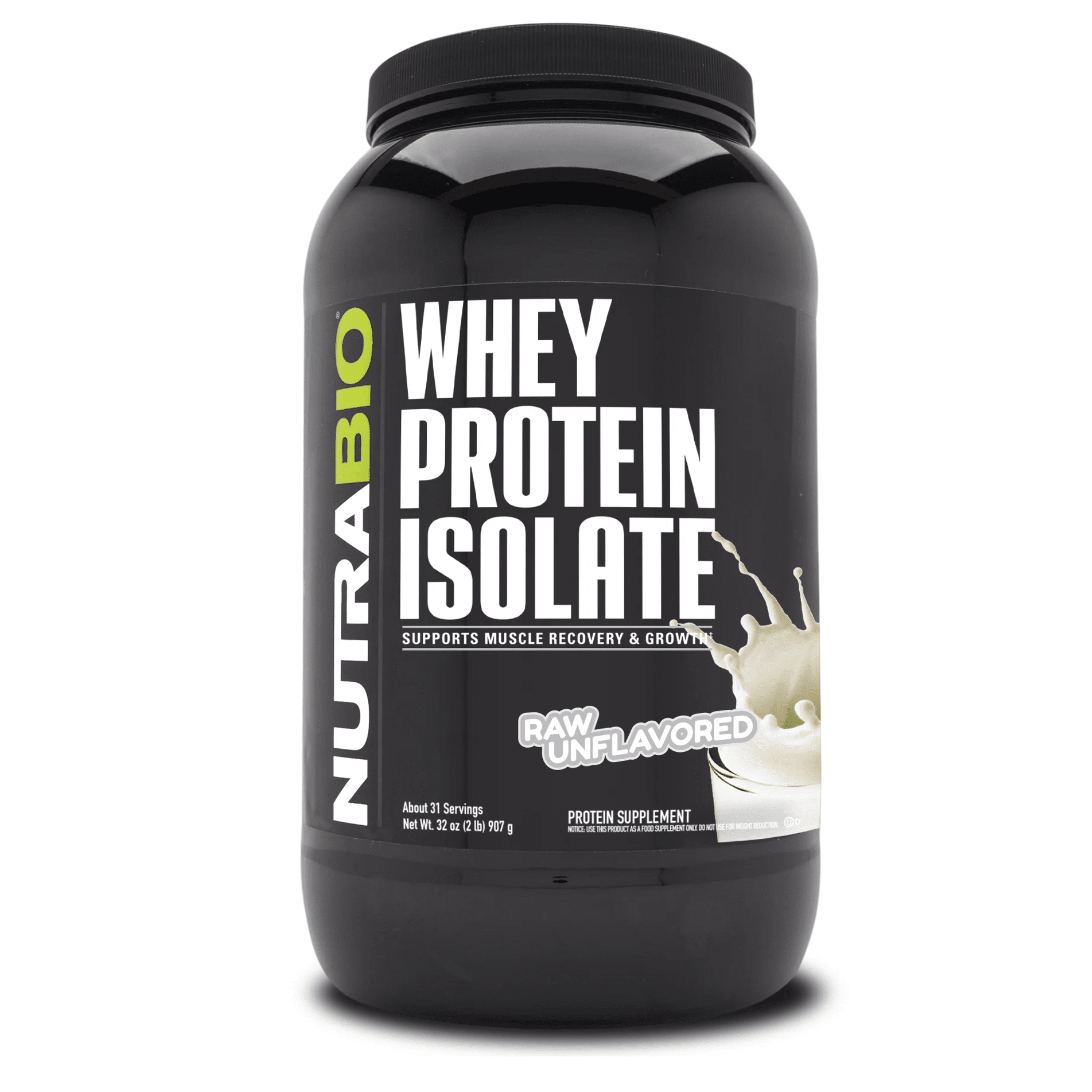


Description
NutraBio 100% Whey Isolate
25 grams of protein at 120 calories, with zero fat, zero sugar and 1 gram of carbohydrate. Pure whey isolate, no fillers, full label disclosure.
The test that tells you whether an isolate is really an isolate
Here is a check you can run on any protein tub, and it is the single most useful thing on this page.
Divide the protein by the scoop weight.
| NutraBio 100% Whey Isolate | 25g protein from a 29g scoop | 86% protein by weight |
| A typical whey blend | 24g from 33g | ~73% |
| A "cream" or dessert blend | 22g from 41g | ~54% |
86% is as high as whey protein realistically gets. The remaining 14% is flavouring, sweetener and the small amount of naturally occurring minerals — there is no room for anything else, because nothing else is in there.
That number is not marketing. It is arithmetic you can do yourself on any tub on any shelf, and it exposes products where a large scoop is hiding filler.
What isolate actually means
Whey comes in grades, and the difference is how much filtering has been done.
- Concentrate — roughly 70–80% protein. Retains more fat, lactose and carbohydrate. Cheaper, and creamier to drink
- Isolate — filtered further to around 90% protein before flavouring. Most of the fat and lactose removed
The practical consequences of that extra filtration:
- Lactose is largely removed, which is why isolate suits many people who get bloating or discomfort from concentrate. Not a substitute for a milk allergy, but a genuine difference for lactose sensitivity
- Zero fat and zero sugar, so the calories are almost entirely protein — 96% of them, in fact
- Faster digestion than concentrate, since there is no fat to slow gastric emptying
Where concentrate wins: it is cheaper, it tastes richer, and the small fat content makes it more satisfying. If you are not lactose sensitive and not counting calories tightly, concentrate is perfectly good and better value.
Full label disclosure — and why it matters on protein specifically
NutraBio publish every ingredient and quantity with no proprietary blends, and third-party test results are available at checkmysupps.com.
On a protein powder, that matters more than almost anywhere else, because of a practice called amino spiking: adding cheap free-form amino acids like glycine, taurine or glutamine to inflate nitrogen-based protein tests, without supplying usable complete protein.
A nitrogen test cannot distinguish between the two. A fully disclosed label can — if the only protein source listed is whey isolate, there is nowhere for spiking to hide.
Specs
| Protein | 25g (100% whey isolate) |
| Calories | 120 |
| Fat | 0g |
| Carbohydrate | 1–2g |
| Sugar | 0g |
| Scoop weight | ~29g |
| Protein by weight | ~86% |
| Free from | Soy, gluten, GMO, fillers |
| Certification | Kosher dairy and halal |
| Allergen | Milk |
The unflavoured version is 110 calories with zero carbohydrate — even leaner, and it goes into oats, yoghurt or baking without adding a flavour you did not want.
Soy free is worth flagging, since many proteins use soy lecithin as a mixing agent.
How our whey proteins compare
| NutraBio 100% Whey Isolate | 25g / 120 cal | 86% protein by weight. Leanest option |
| NutraBio Clear Whey | 20g / 100 cal | Drinks like fruit juice, not a shake |
| Rule One R1 Protein | 25g | Informed Choice certified |
| CBUM Itholate | 25g / 31g scoop | 80% by weight. Informed Protein |
NutraBio is the pick if leanness and label transparency matter most. Rule One if you need banned-substance certification. Clear Whey if you cannot face a creamy shake.
How to mix it
- One scoop in 5 to 6oz of water or milk. Isolate needs less liquid than most — it is dense and mixes easily.
- Water keeps it at 120 calories. Milk adds roughly 100 more and makes it creamier.
- Any time — post-workout, between meals, or as a protein top-up.
- Bakes well, particularly the unflavoured version.
- Add it to oats or yoghurt once they have cooled slightly.
Who this is for
- Anyone counting calories — 96% of the calories here are protein
- People who get bloating or discomfort from whey concentrate
- Anyone cutting, where protein per calorie is the priority
- People following keto or low-carb approaches — 1g of carbohydrate
- Anyone who wants to verify what is in the tub, including published lab results
- People avoiding soy
- Anyone needing kosher dairy or halal certification
Who this is not for
If you have a milk allergy rather than lactose intolerance, no whey is suitable. Our plant proteins are the alternative.
If you want a thick, dessert-like shake, isolate is leaner and thinner by design. A concentrate or blend gives you that.
If value per gram matters most, concentrate is cheaper and perfectly good when lactose is not an issue.
If you need banned-substance certification, Rule One R1 Protein is Informed Choice certified.
Stack it with: creatine, which mixes into a shake without affecting taste.
Frequently asked questions
How much protein per serving?
25g at 120 calories, from a roughly 29g scoop — around 86% protein by weight, which is as high as whey realistically gets.
What is the difference between isolate and concentrate?
Isolate is filtered further, to about 90% protein before flavouring, removing most of the fat and lactose. Concentrate is 70–80%, cheaper and creamier.
Is it suitable if I'm lactose intolerant?
Generally yes — isolate has most of the lactose filtered out. It is not suitable for a milk allergy.
What is amino spiking?
Adding cheap free-form amino acids to inflate nitrogen-based protein tests without supplying usable complete protein. A fully disclosed label leaves nowhere for it to hide.
Does it contain soy?
No. Many proteins use soy lecithin as a mixing agent; this does not.
Can I bake with it?
Yes, and the unflavoured version is particularly good for that.
How much water should I use?
5 to 6 ounces. Isolate is dense and needs less liquid than most proteins.
Is it third-party tested?
Yes, and results are published at checkmysupps.com — very few brands do that.
Customers praised this whey isolate for its "great flavors" and smooth texture that "dissolves easily" without being chalky. Many noted it's clean and easy to digest. However, some customers found certain flavors had an unexpected aftertaste or finish. Shoppers appreciated the fast shipping and excellent customer service.
- 5 stars: 25 (83%)
- 4 stars: 1 (3%)
- 3 stars: 1 (3%)
- 2 stars: 1 (3%)
- 1 star: 2 (7%)
I love all of nutra bios flavors. The protein dissolves quick, and it’s not chalky. Great product.
High quality, good tasting protein. Fast shipping gland excellent customer service!
Great tasting and easy digesting
I really like the texture of this protein but it has an interesting aftertaste that I was not expecting. Might try a different flavor.
I’ve tried several flavors of the nutribio whey isolate now and the chocolate PB is by far my favorite. The others I’ve tried are Bombs Away, Maple syrup and pancakes and the cookies and creme. They’re all good! Shipping is always really fast and customer service has been super helpful when needed! Great supplier 🙌🏻
Tastes great and I'm going through it faster than expected. Ordering and shipping was easy.
I don’t buy any other protein, it’s clean and the flavors are great.
Nutrition Bio 100% Whey Isolate never lets me down. The flavors are great and it’s just what I need to replenish my muscles after a workout.
Love this product!
Unfortunately, I did not like the flavor and have only used it once.
Awesome taste. I really like the flavor.
Love the flavor
Awesome customer service and products.
I don’t care for the taste and the items can’t be returned. Disappointed.
I am not a fan of this flavor. I do not like the finish at all. I think Rule 1 chocolate peanut butter has a much better taste. I have not yet opened the other flavor I ordered but hoping it is better because I really like all the other Nutro Bio products I bought. This is the first one I will jot order again.
Loved it
The team at coalition was helpful with picking the right protein for me and showing me the brand. The flavor is phenomenal.
Fast shipping. Tasty protein
I use this mostly for Protein French Toast and it does the job. I don't love the taste on its own. Mixes well.
First time trying this whey isolate. Flavor is great. I just went with Vanilla. Love how it dissolves easily and completely in a shaker. Looking forward to seeing how this can improve my results.
Really am loving the Nutra Bio protein shakes with all of their crazy delicious favors! Coalition is an amazing company to work with! Not only did I receive my order quickly and ahead of schedule (I’m on the west coast) but getting a personal handwritten note from them is definitely a nice touch. A definite Class Act!
Nutra Bio 100% Whey Isolate
Nutra Bio 100% Whey Isolate
Clean. No artificial sweeteners. Tastes great.
Nutra Bio - 100% Whey Isolate
Nutra Bio - 100% Whey Isolate
Nutra Bio - 100% Whey Isolate
I got this product after one of my buddies told me how it worked for him. The pre-work out gives me a good solid pump & the whey isolate is very tasty & clean. Honestly, 10 out 10 bro! Would recommend & buy more.
easy on my stomach. other proteins cause me to bloat.
Taste great and it mixes really well so there’s never any clumps
You may also like
Recently viewed
- Opens in a new window.