
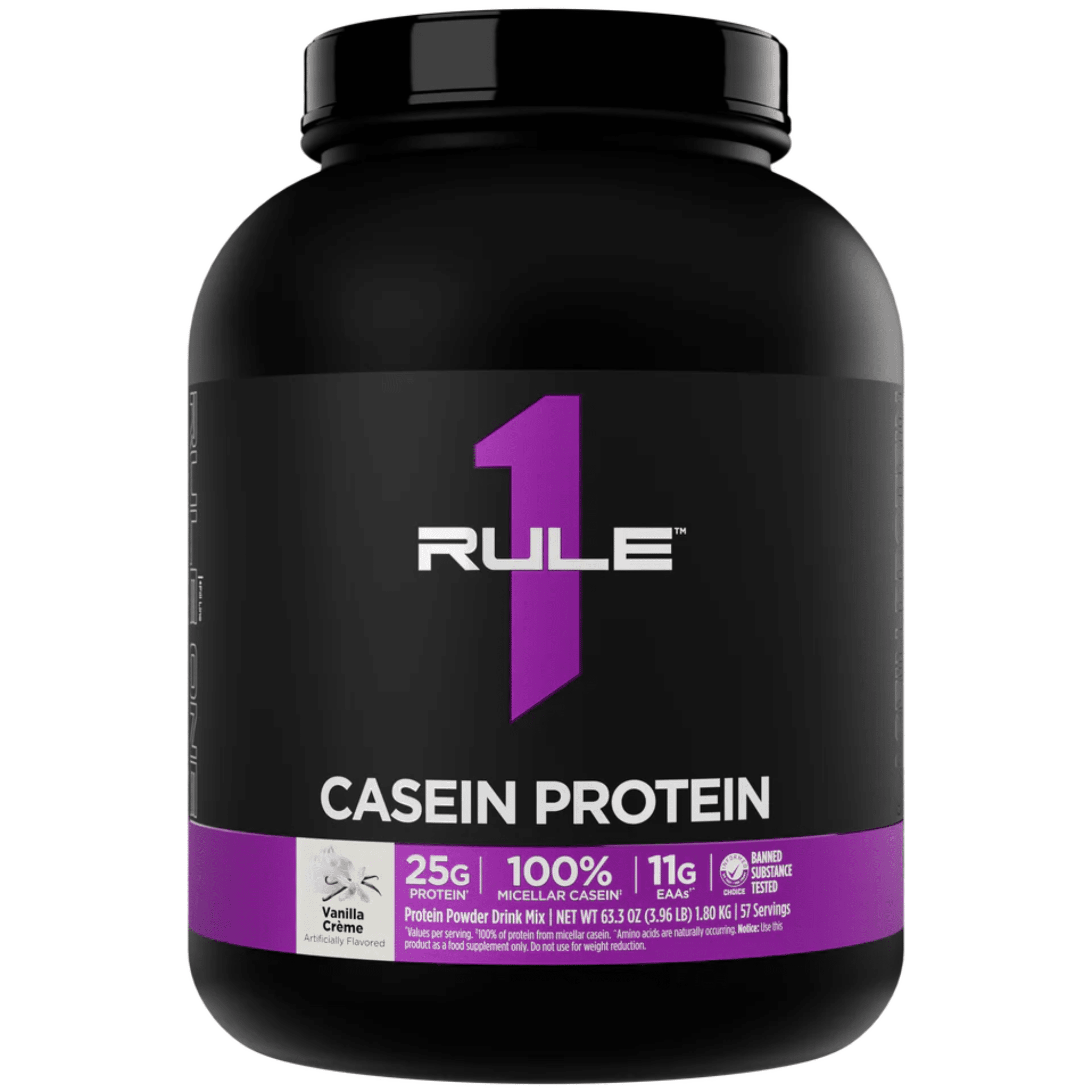
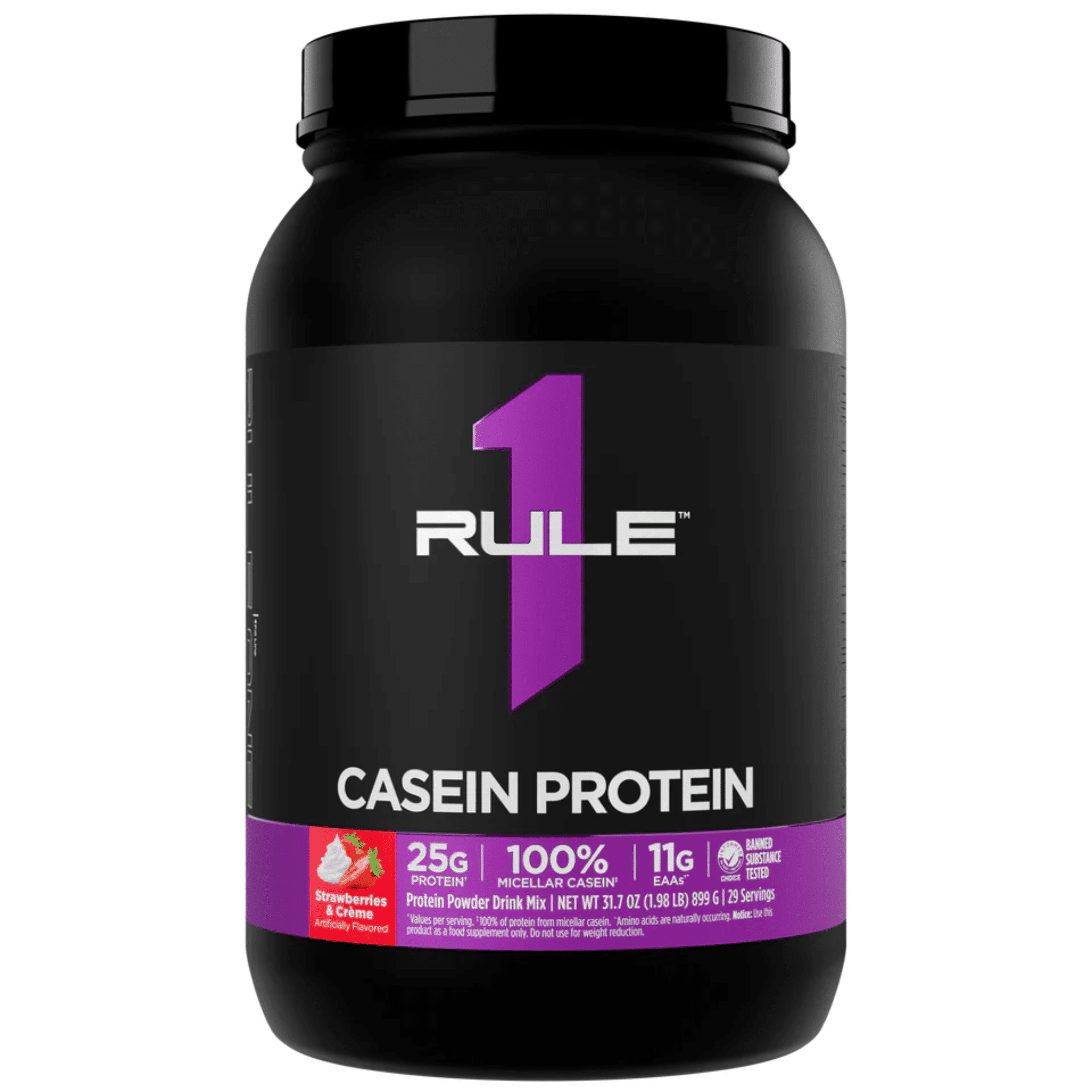


Description
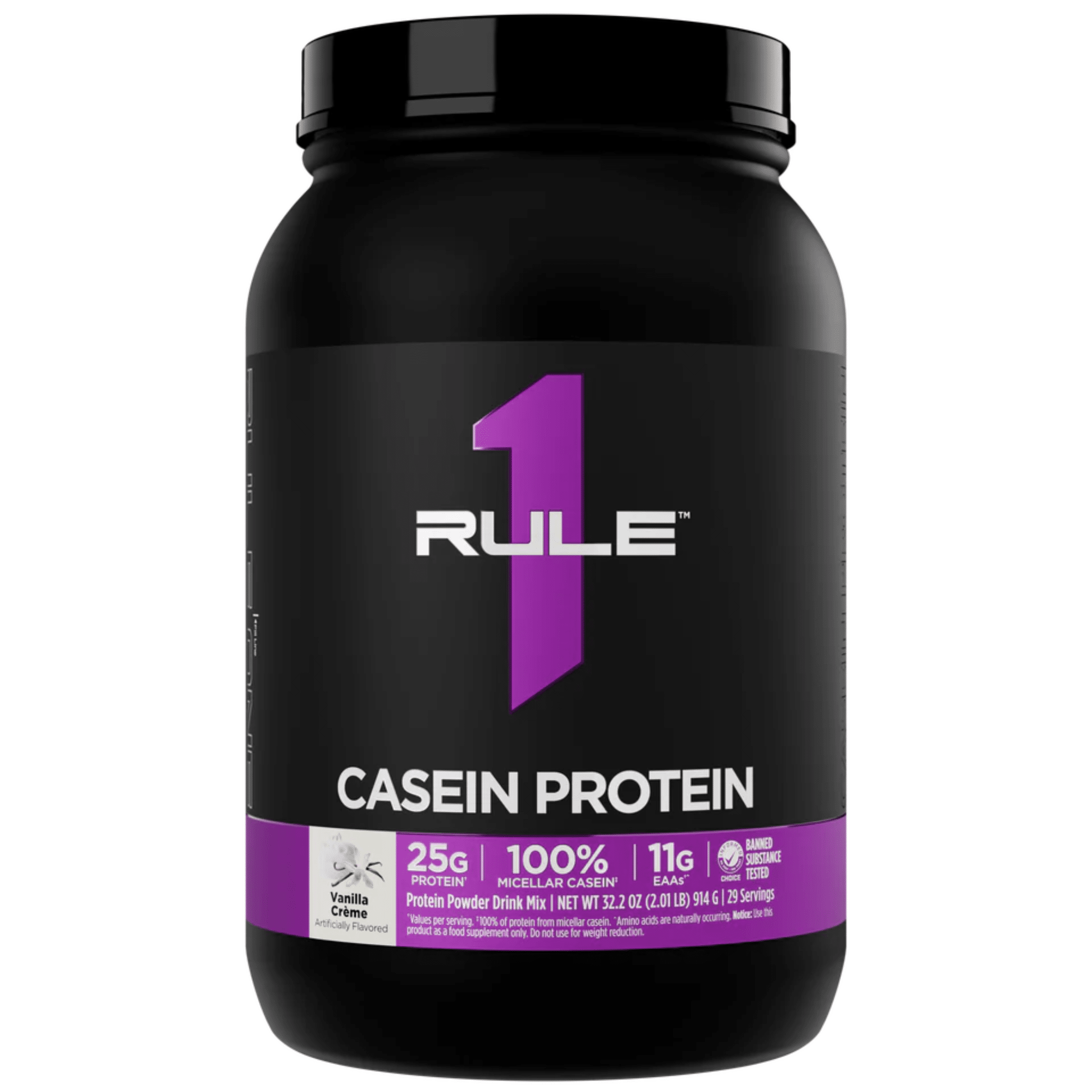
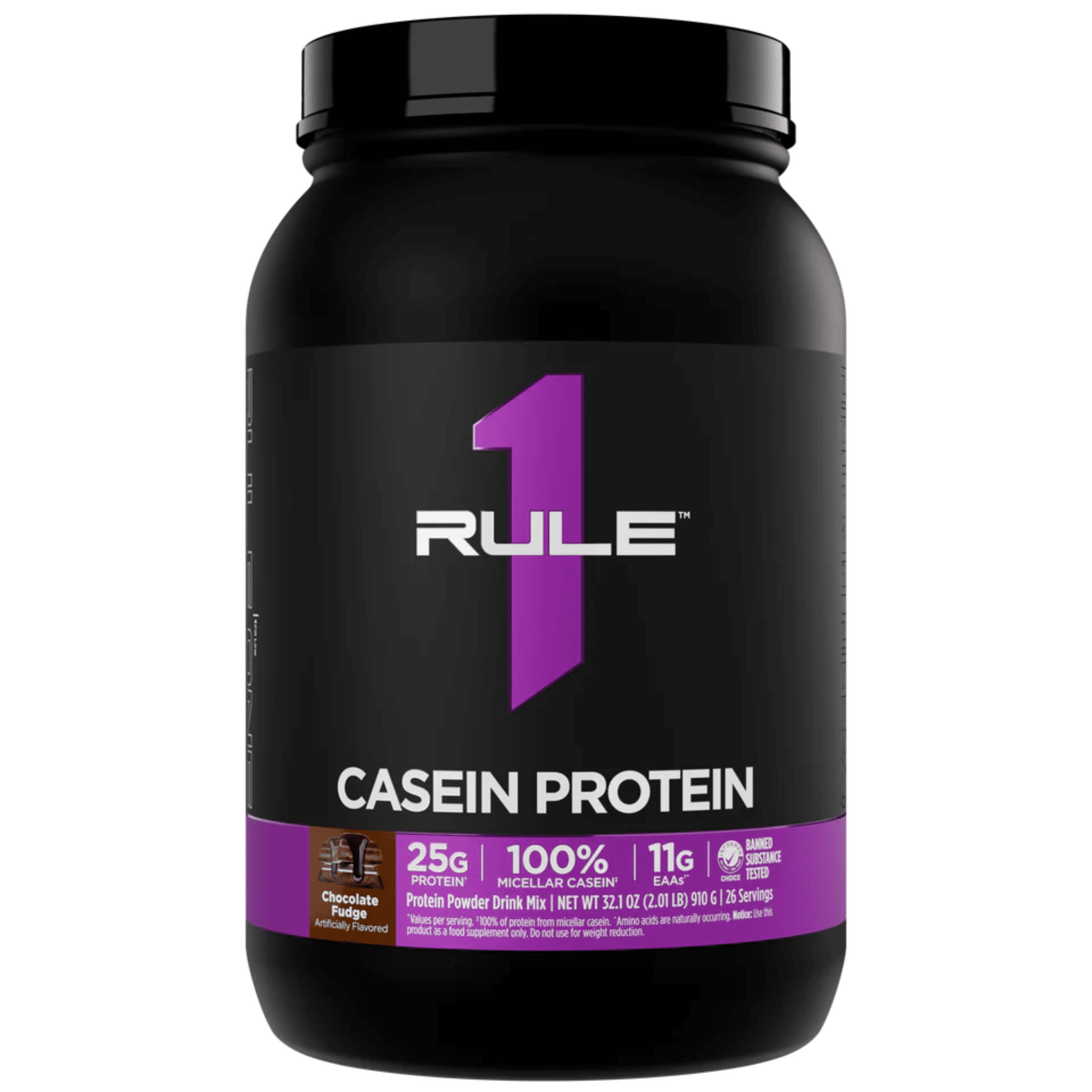
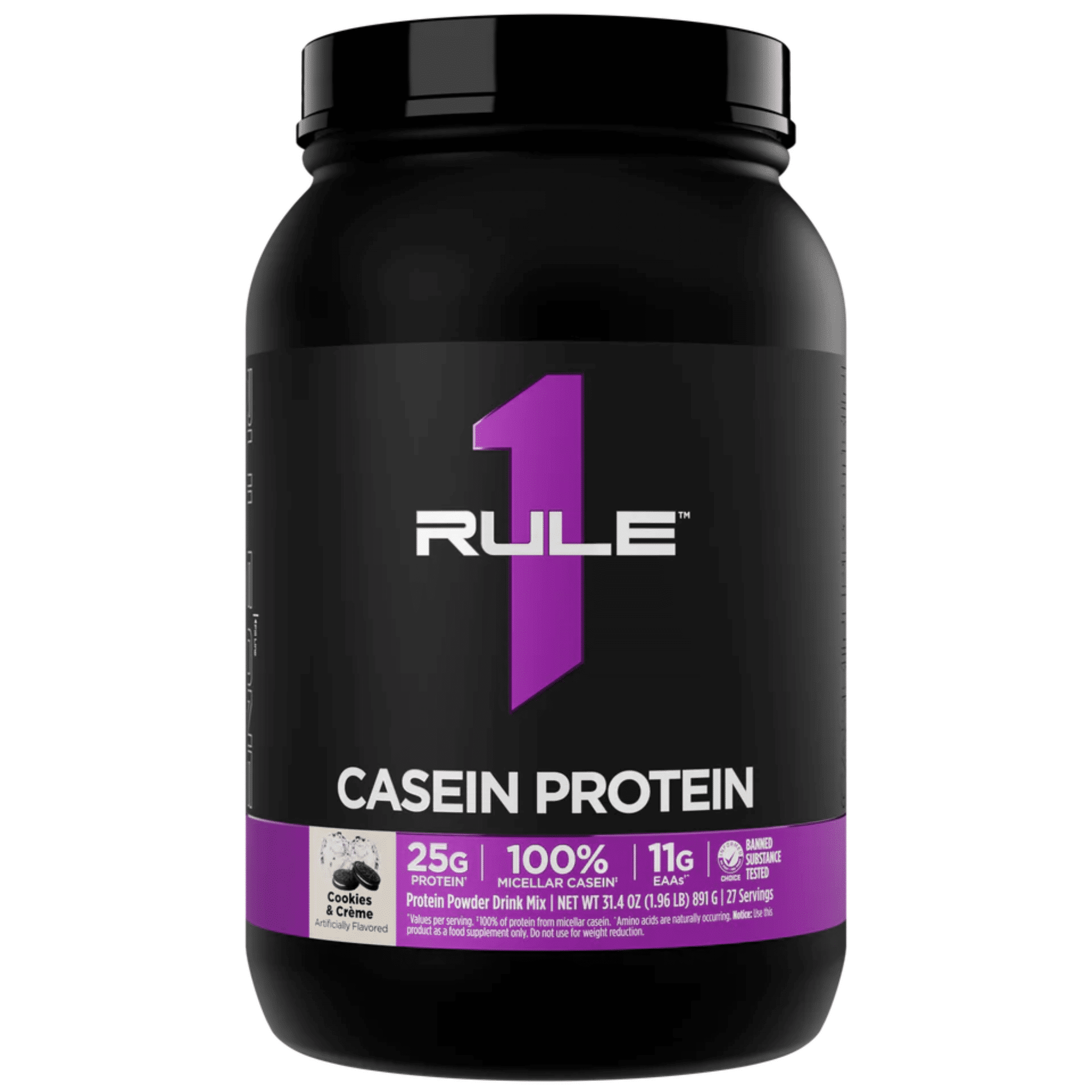
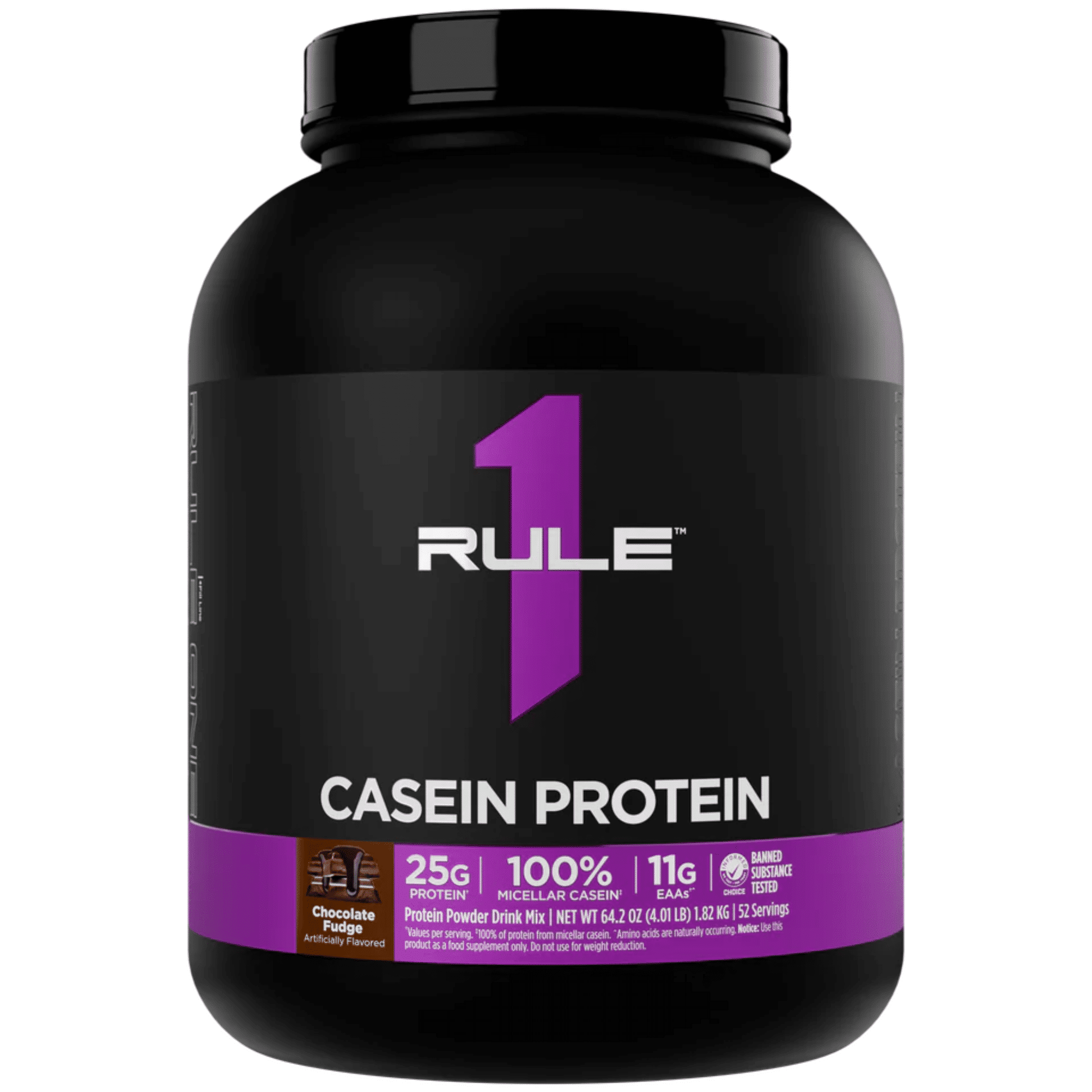
Rule One Casein
Micellar casein — a slow-digesting protein that releases amino acids over hours rather than minutes.
The gel is the mechanism
Casein is not simply "slow whey", and the reason is physical rather than metaphorical.
Casein coagulates in stomach acid, forming a gel. Milk is roughly 80% casein and 20% whey, and casein is the fraction that curdles — which is exactly what makes cheese possible.
That gel has to be broken down before the amino acids inside can be absorbed, which slows digestion dramatically:
| Whey | Peaks in roughly 60–90 minutes | Sharp rise, quick clearance |
| Casein | Releases over 5–7 hours | Lower peak, sustained |
Neither is better. They do different jobs — and the right choice depends on how long until your next protein feeding, not on which digests faster.
Where slow protein genuinely wins
- Before bed. The obvious one — seven or eight hours is by far the longest gap between protein feedings in your day, and casein is the only protein that meaningfully spans it. Research on pre-sleep protein has generally used casein for exactly this reason
- Long gaps during the day — a lengthy meeting, a long drive, or any stretch where you cannot eat
- Satiety while dieting. The gel that slows digestion also keeps you fuller, which is genuinely useful in a deficit
- Anyone eating fewer, larger meals, where gaps between feedings are naturally longer
⚠ Where casein is the wrong choice
Worth being direct, because people buy it for the wrong occasion.
Not around training. A gel forming in your stomach is the opposite of what you want before or during a session — it sits heavily, and the slow release does nothing acutely. Whey isolate or a hydrolysed protein is the right tool there.
And an honest note on the "anti-catabolic overnight" claim: the idea that you waste away without protein while asleep is overstated. Total daily protein matters far more than any single feeding, and if you hit your daily target, adding casein before bed is a refinement rather than a rescue. It is a genuine refinement — but a refinement.
How to judge a casein product
- Micellar casein is the intact, native form — the one that gels properly. Calcium caseinate is processed differently and digests somewhat faster, so check which you are buying
- Protein by weight. Divide protein by scoop weight, as with any protein
- Expect it to be thick. Casein needs considerably more water than whey, and it will still be thicker
Specs
| Protein | Micellar casein |
| Digestion | Slow — 5 to 7 hours |
| Label | Fully disclosed |
| ⚠ Allergen | Contains milk |
Rule One's range is widely Informed Choice certified — check your tub, and if you are a tested athlete that certification is the reason to choose them.
Our protein range by speed
| Hydrolysed peptides | Fastest | Intra-workout |
| Whey isolate | Fast | Everyday, around training |
| Whey blend | Fast | Everyday |
| Rule One Casein | Slow | Before bed, long gaps |
| Multi-source blends | Staged | Between the two |
How to take it
- 30 to 60 minutes before bed, which is the primary use.
- Use more water than you would for whey — casein thickens considerably.
- Or use less water deliberately and eat it as a pudding, which is more satisfying while dieting.
- Let it sit a minute after mixing so it hydrates properly.
- Not before or during training.
- Count it toward your daily protein total.
Who this is for
- Anyone wanting protein before bed, across the longest gap of the day
- People dieting, where the satiety genuinely helps
- Anyone with long stretches where eating is impossible
- People eating fewer, larger meals
- Tested athletes, if the tub carries Informed Choice certification
Who this is not for
Anyone wanting protein around training. A gel in your stomach is the wrong thing there — use whey.
Anyone whose daily protein target is not yet met. Fix the total first; casein before bed is a refinement on top of that, not a substitute for it.
Anyone with a milk allergy — casein is the milk protein most associated with allergy specifically.
Anyone who dislikes thick shakes. Casein will always be thicker than whey.
Not for anyone under 18 without medical advice.
Stack it with: magnesium before bed, which works on relaxation by a different route entirely.
Frequently asked questions
Why is casein slow?
It coagulates in stomach acid and forms a gel, which has to be broken down before the amino acids can be absorbed. That releases them over five to seven hours rather than one to two.
Is casein better than whey?
Neither is better — they do different jobs. Whey suits short gaps and around training; casein suits long gaps, particularly overnight.
Do I need protein before bed?
Total daily protein matters far more. If you hit your target, casein before bed is a genuine refinement rather than a rescue.
Can I take it around training?
Better not. A gel forming in your stomach is the opposite of what you want before or during a session.
Micellar casein or calcium caseinate?
Micellar is the intact native form that gels properly. Calcium caseinate is processed differently and digests somewhat faster.
Why is it so thick?
That is inherent to casein. Use more water than you would for whey — or deliberately use less and eat it as a pudding.
Does it help with dieting?
Yes, more than whey does. The gel that slows digestion also keeps you fuller.
Can I take it if I'm lactose intolerant?
Casein products vary in lactose content. A milk allergy is a different matter — casein is the milk protein most associated with allergy specifically.