

Description
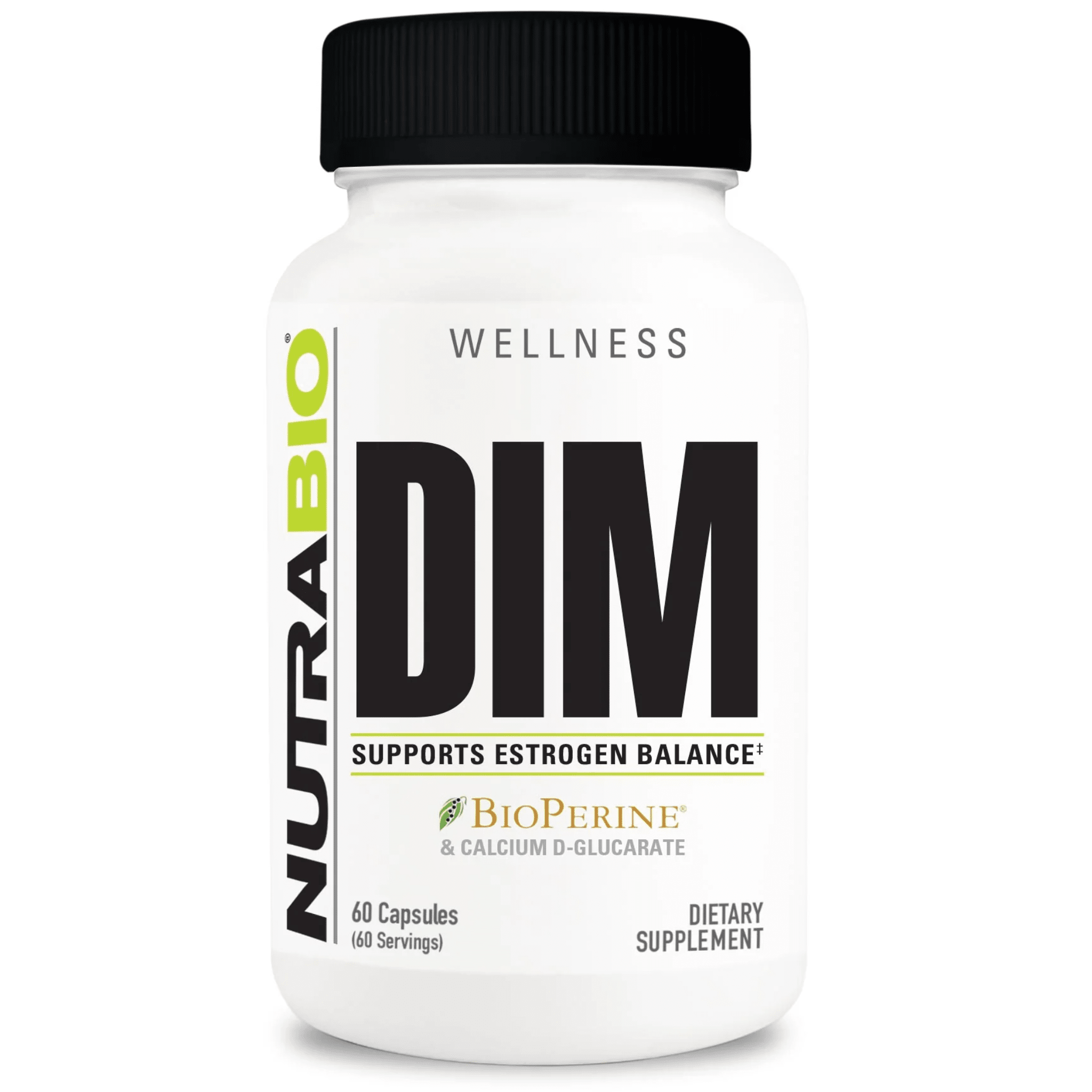
NutraBio DIM
Diindolylmethane, single ingredient, with no fillers or excipients. Fully disclosed and third-party tested.
What DIM is, and where it comes from
This is one of the more interesting compounds on our shelf because of its origin.
DIM is not present in food. It forms in your stomach.
Cruciferous vegetables — broccoli, cauliflower, kale, Brussels sprouts, cabbage — contain a compound called indole-3-carbinol (I3C). When you eat them and I3C meets stomach acid, it converts into several compounds, and DIM is the principal stable one.
Which is why DIM supplements exist: to get a meaningful amount from food you would need to eat a very large quantity of cruciferous vegetables consistently, and the conversion varies between people.
⚠ The important distinction: DIM does not block oestrogen
DIM is frequently sold as an "oestrogen blocker", and that is not what it does. The real mechanism is more specific and worth understanding.
Your body metabolises oestrogen down several different pathways, and they are not equivalent. The two that matter here:
- The 2-hydroxy pathway — produces metabolites generally regarded as more favourable
- The 16-hydroxy pathway — produces metabolites with stronger oestrogenic activity
DIM appears to shift metabolism toward the 2-hydroxy pathway. It is not reducing oestrogen; it is influencing which metabolites you end up with.
Why the distinction matters practically: if you are expecting DIM to lower oestrogen the way an aromatase inhibitor does, that is not the mechanism, and you will be disappointed. It is a metabolism modulator, not a blocker.
And it is not a post-cycle therapy drug. DIM appears in a lot of PCT products, but it is not a substitute for a proper SERM-based protocol after a suppressive cycle. Anyone who needs that needs medical guidance, not a supplement.
Who takes it, and why
- Men wanting oestrogen metabolism support, particularly alongside or after compounds that affect hormones
- Women managing hormonal symptoms, where DIM has been studied in relation to oestrogen dominance patterns
- Anyone who eats few cruciferous vegetables and wants the compound they would otherwise produce from them
- People interested in the detoxification pathway research, since DIM also influences phase I and phase II liver enzymes
An honest note on the evidence: the mechanism is well characterised and the pathway shift is documented. What is less established is how much that translates into symptom change for a given individual. It is a reasonable, well-tolerated thing to try with realistic expectations — not a hormonal intervention.
⚠ Practical notes and cautions
DIM is poorly absorbed on its own. It is fat-soluble and has low bioavailability in plain form, which is why many products use enhanced-absorption preparations. Take it with a meal containing fat regardless.
Expect your urine to change colour. DIM commonly turns urine a distinct amber or orange. That is entirely normal and harmless, and it surprises people who have not been warned.
Headaches are the most commonly reported side effect, usually at higher doses and usually settling.
Speak to your doctor first if:
- You have any hormone-sensitive condition
- You take hormonal medication, including contraception or hormone replacement
- You take any medication metabolised by liver enzymes — DIM influences several of them
Specs
| DIM | Diindolylmethane, single ingredient |
| Other ingredients | None beyond the capsule |
| Label | Fully disclosed, no proprietary blends |
| Testing | Third-party tested, published at checkmysupps.com |
How to take it
- With a meal containing fat. DIM is fat-soluble and poorly absorbed without it.
- Follow the label rather than escalating — headaches are dose-related.
- Daily and consistently. This works on metabolic pathways over weeks, not acutely.
- Expect amber urine. Normal.
- Alongside cruciferous vegetables rather than instead of them — those bring fibre and much else besides.
Who this is for
- Anyone wanting oestrogen metabolism support with a realistic understanding of the mechanism
- People who rarely eat broccoli, cabbage or Brussels sprouts
- Anyone using it alongside a hormonal support protocol under guidance
- People who want a single ingredient rather than a multi-ingredient hormone blend
Who this is not for
Anyone expecting it to block oestrogen. DIM shifts which metabolites are produced; it does not lower oestrogen the way an aromatase inhibitor does.
Anyone using it as post-cycle therapy after a suppressive cycle. That requires medical guidance, not a supplement.
Anyone with a hormone-sensitive condition, or taking hormonal medication, without speaking to a doctor.
Anyone on medication metabolised by liver enzymes, without checking.
Anyone who finds the urine colour change alarming — though it is harmless.
Not for anyone under 18, pregnant or nursing.
Stack it with: milk thistle if liver support is part of your reasoning, and adequate fibre, which matters for oestrogen clearance through the gut.
Frequently asked questions
What is DIM?
Diindolylmethane, formed in your stomach when indole-3-carbinol from cruciferous vegetables meets stomach acid. It is not present in food itself.
Does DIM block oestrogen?
No. It shifts oestrogen metabolism toward the 2-hydroxy pathway, which produces metabolites generally regarded as more favourable. It does not lower oestrogen.
Can I use it as post-cycle therapy?
No. DIM is not a substitute for a proper protocol after a suppressive cycle — that needs medical guidance.
Why has my urine turned orange?
DIM commonly does that. Entirely normal and harmless.
Should I take it with food?
Yes, with a meal containing fat. DIM is fat-soluble and poorly absorbed on its own.
Could I just eat broccoli instead?
You would need a very large and consistent quantity, and conversion to DIM varies between individuals. Eat the vegetables anyway for the fibre and everything else.
Are there side effects?
Headaches are the most commonly reported, usually dose-related. The urine colour change is harmless.
Is it safe with hormonal medication?
Speak to your doctor. DIM affects oestrogen metabolism and influences liver enzymes involved in processing many drugs.
You may also like
Recently viewed
- Opens in a new window.