

Description
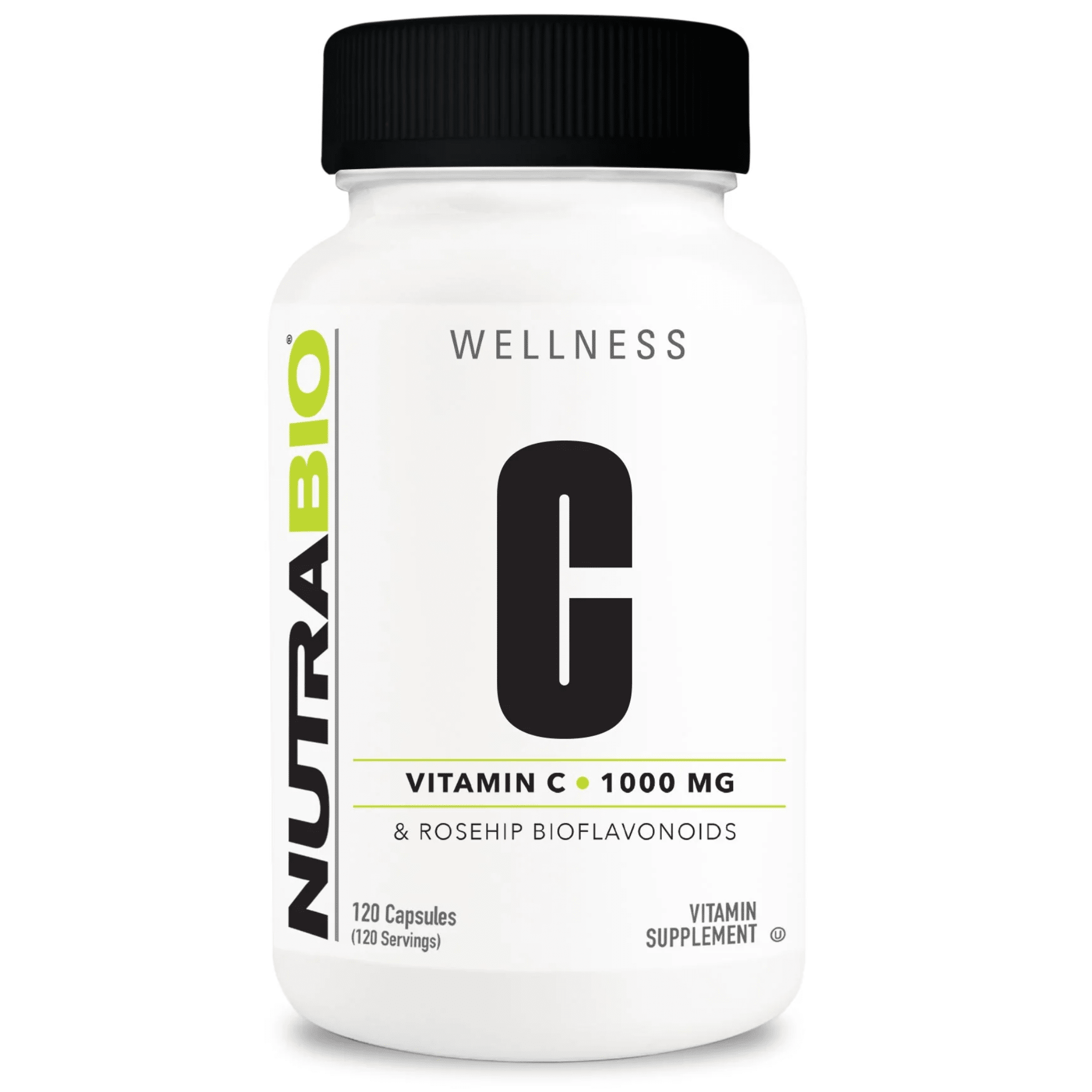
NutraBio Vitamin C with Rose Hips
Vitamin C paired with rose hips, single ingredient beyond that, with no fillers or excipients. Fully disclosed and third-party tested.
⚠ The dosing point nobody explains: absorption falls as the dose rises
This is the most practically useful thing on this page.
Vitamin C absorption is saturable. It is taken up by specific transporters in the intestine, and those transporters have a limited capacity.
What that means in practice:
| Doses around 200mg | Absorption is high — in the region of 80–90% |
| Around 1,000mg | Absorption falls to roughly half |
| Above that | Absorption continues dropping, and the unabsorbed remainder draws water into the bowel |
So a single 2,000mg dose does not deliver twice what 1,000mg does. It delivers somewhat more, wastes the rest, and is the usual reason people report loose stools from vitamin C.
The fix is free: if you want a higher daily intake, split it into two or three smaller doses through the day rather than taking it all at once. You will absorb considerably more of it.
Why rose hips are included
Rose hips are the fruit of the rose plant and one of the richest natural sources of vitamin C.
The reason to include them is not the vitamin C content — the ascorbic acid in the product supplies that. It is that rose hips also contain bioflavonoids, plant compounds that occur alongside vitamin C in whole foods.
The reasoning is that vitamin C never appears in isolation in nature, and bioflavonoids may support its activity and stability. That is a plausible argument rather than a proven one — the evidence that added bioflavonoids meaningfully improve vitamin C absorption in humans is modest.
Our honest read: it is a sensible, food-derived addition rather than a transformative one. Buy this for the vitamin C, and treat the rose hips as a small bonus.
What vitamin C genuinely does
Vitamin C is essential — humans are among the few mammals that cannot synthesise it, which is why scurvy exists.
- Collagen synthesis. This is the one most people miss, and it is not optional. Vitamin C is a required cofactor for the enzymes that hydroxylate proline and lysine during collagen formation. Without adequate vitamin C, collagen synthesis fails — which is exactly what scurvy is. If you take collagen, this is its necessary partner
- Antioxidant activity, including regenerating vitamin E
- Iron absorption. Vitamin C substantially increases absorption of non-haem iron — the form in plant foods. Genuinely relevant for vegetarians and vegans
- Immune function. Immune cells accumulate vitamin C at high concentrations. The evidence suggests regular supplementation may modestly shorten colds rather than prevent them
Specs
| Vitamin C | Ascorbic acid, with rose hips |
| Other ingredients | None beyond the capsule |
| Label | Fully disclosed, no proprietary blends |
| Testing | Third-party tested, published at checkmysupps.com |
Vitamin C is water-soluble, so excess is excreted rather than stored. That makes it safe at generous doses, though the tolerable upper intake level is generally cited at 2,000mg daily — largely because of the digestive effects rather than toxicity.
How to take it
- Split larger amounts across the day. Two or three smaller doses beat one large one, by a wide margin.
- With food, which reduces stomach irritation from the acidity.
- With an iron-rich meal if you are vegetarian or vegan — vitamin C substantially improves non-haem iron absorption.
- Alongside collagen if you take it, since collagen synthesis genuinely requires it.
- Daily rather than only when ill. The evidence favours regular intake shortening colds over large doses started once symptoms appear.
Who this is for
- Anyone taking collagen — vitamin C is a genuine requirement for collagen synthesis, not an optional pairing
- Vegetarians and vegans, for the iron absorption effect
- People who train hard, where oxidative stress and immune load both rise
- Smokers, who have measurably higher vitamin C requirements
- Anyone who wants a single-ingredient product rather than a megadose blend
Who this is not for
Anyone with a history of kidney stones. High-dose vitamin C increases urinary oxalate, which is a genuine consideration for calcium oxalate stone formers. Speak to your doctor.
Anyone with haemochromatosis or an iron overload condition — vitamin C increases iron absorption, which is the wrong direction there.
If you get loose stools, reduce the dose or split it. That is the classic sign of exceeding absorption capacity.
If you already take a multivitamin, you are getting vitamin C in it.
One honest note for athletes: as with NAC, there is an argument that high-dose antioxidants around training may blunt some adaptation, since the oxidative signal is part of what drives it. Taking it away from your workout is the cautious approach.
Not for anyone under 18 without medical advice.
Stack it with: collagen, where the pairing is biochemically necessary rather than optional.
Frequently asked questions
How much vitamin C should I take at once?
Less than you might think. Absorption is saturable — around 200mg absorbs at 80–90%, while 1,000mg absorbs at roughly half. Split larger amounts across the day.
Why does vitamin C give me loose stools?
Unabsorbed vitamin C draws water into the bowel. That is the classic sign you have exceeded absorption capacity — reduce or split the dose.
What are rose hips for?
Bioflavonoids, which occur alongside vitamin C in whole foods and may support its activity. A sensible food-derived addition rather than a transformative one.
Do I need vitamin C with collagen?
Yes. Vitamin C is a required cofactor for the enzymes that build collagen — without it, collagen synthesis fails. That is settled biochemistry.
Does it prevent colds?
The evidence suggests regular supplementation may modestly shorten colds rather than prevent them, and that taking it regularly beats starting once symptoms appear.
Should I take it with food?
Yes — it reduces stomach irritation from the acidity, and pairing it with an iron-rich meal improves iron absorption.
Can I take too much?
It is water-soluble and excess is excreted. The upper intake level of 2,000mg daily is set largely because of digestive effects rather than toxicity.
Any reason to avoid it?
A history of calcium oxalate kidney stones, or an iron overload condition, both warrant a conversation with your doctor.
You may also like
Recently viewed
- Opens in a new window.