


Description
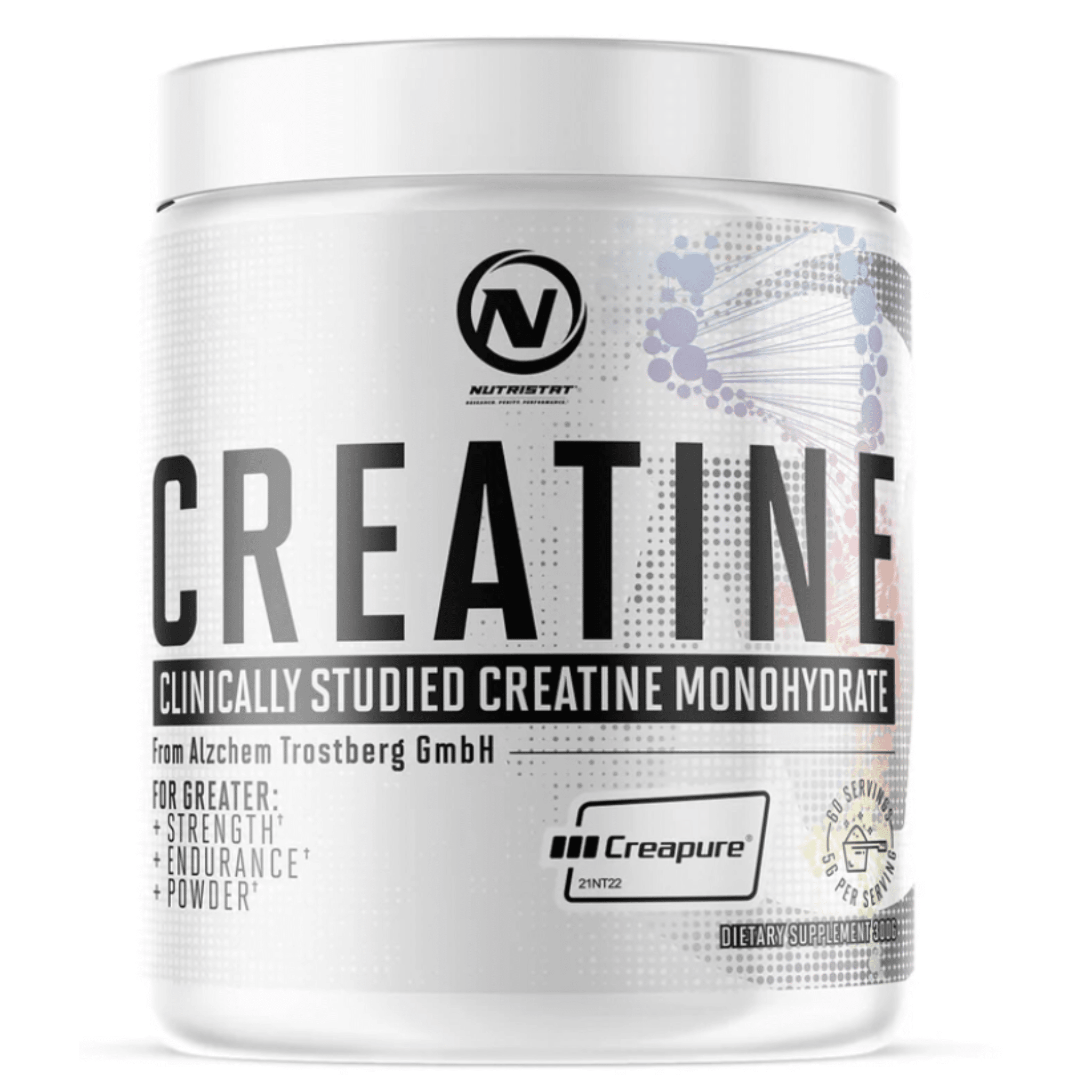
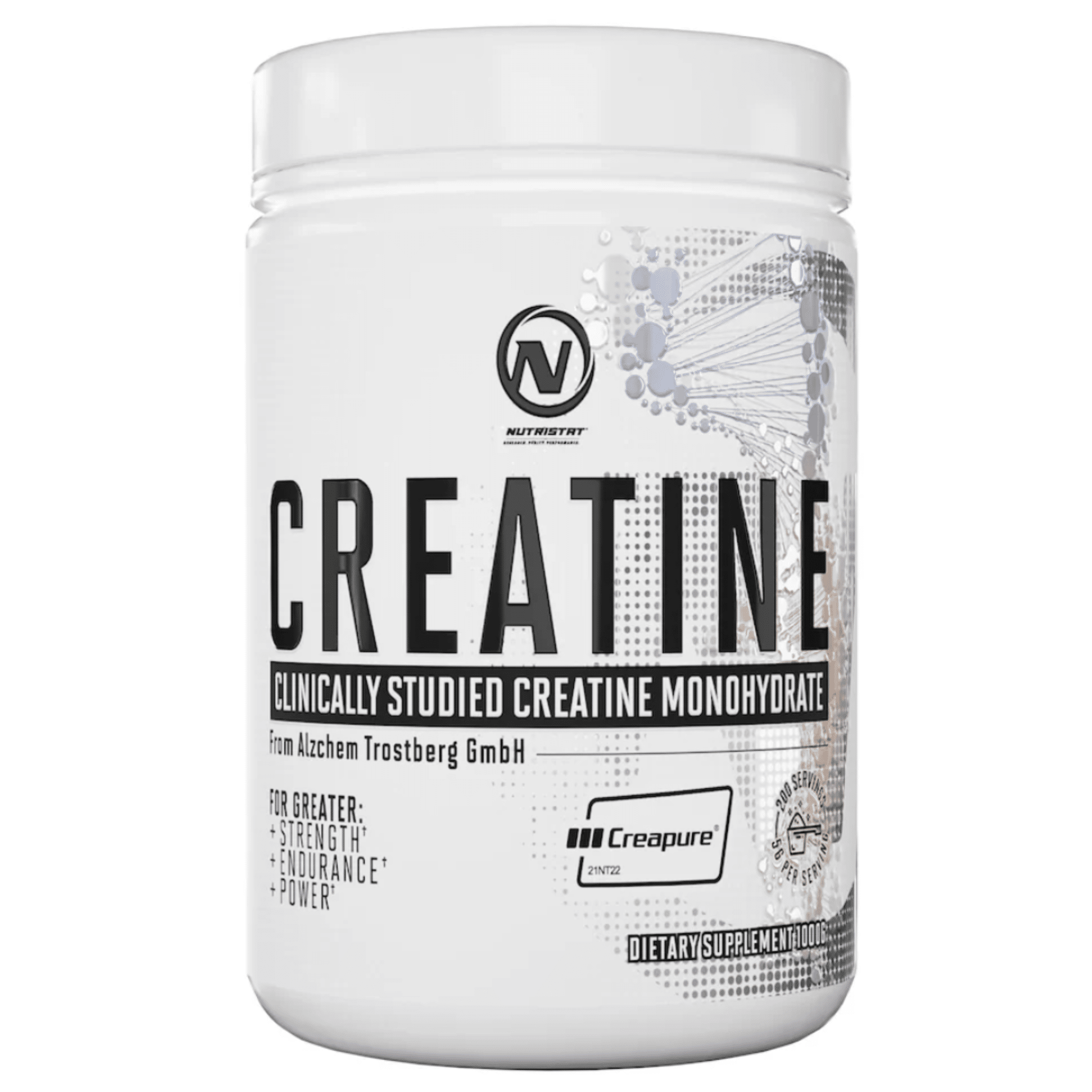
Nutristat Creapure Creatine
One ingredient. 5 grams of Creapure creatine monohydrate per scoop, 99.9% pure, made in Germany. No fillers, no dyes, no sweeteners, no anti-caking agents, no proprietary blend.
This is our best-selling creatine and the one we hand people when they ask which one to buy. Nutristat was also one of our original brand partners, so we have been selling this longer than most shops have carried the brand.
What creatine actually does, properly explained
Your muscles run on ATP — adenosine triphosphate, the molecule cells use as immediate energy currency. When a muscle contracts, ATP loses a phosphate group and becomes ADP, releasing energy in the process.
Here is the constraint: your muscles store only enough ATP for a few seconds of maximal effort. Not minutes. Seconds. Everything beyond that depends on how fast you can regenerate ATP from ADP.
That is where creatine comes in. Creatine is stored in muscle as phosphocreatine, and phosphocreatine's job is to donate its phosphate group to ADP, converting it straight back into usable ATP. It is the fastest energy regeneration system your body has.
More phosphocreatine stored in muscle means more ATP regeneration during a hard set. In practice that is a rep or two more, a slightly heavier top set, less drop-off across a session. Repeated over months, that additional training volume is what produces the results attributed to creatine.
Creatine does not build muscle directly. It lets you train harder, and the training builds the muscle. That distinction is worth understanding, because it explains why creatine works reliably for people who train hard and does very little for people who do not.
Why Creapure specifically
Creatine monohydrate is a bulk commodity chemical, and the molecule is identical wherever it is made. Everything that separates one tub from another comes down to what else ended up in it and how carefully it was made.
Creapure is produced by AlzChem Trostberg GmbH in Trostberg, Bavaria — and the detail that matters is that the facility produces Creapure and nothing else. A dedicated single-product plant removes cross-contamination risk from other chemical manufacturing entirely. That is not something most creatine sources can claim.
It uses pharmaceutical-grade raw materials and multiple purification steps, which drive impurity levels below the detection threshold of HPLC testing. Independent analyses of generic creatine regularly find dicyandiamide and dihydrotriazine, both byproducts of creatine synthesis. Neither appears on any label, because nobody declares what they did not intend to include.
Creapure is also the only creatine produced in the western hemisphere under German and European quality standards, and it is regularly tested for banned substances — which is what makes it usable by tested athletes.
And this is the part we like most: AlzChem publishes the Creapure Certificate of Analysis publicly. Anyone — retailer or customer — can verify the purity data independently. A company only does that when every batch will stand up to it.
The myths, answered straight
Creatine is the most researched supplement in existence and also the most misunderstood. Here is what the evidence actually says.
"Creatine damages your kidneys."
It does not, in healthy people, and this has been studied extensively over decades including in long-term trials. The myth persists because of a measurement artefact worth knowing about: creatine supplementation raises serum creatinine, and serum creatinine is the marker doctors use to estimate kidney function. Higher creatinine can look like kidney impairment on a blood test when nothing is wrong.
So tell your doctor you take creatine before any bloodwork. It saves a false alarm and possibly an unnecessary referral. That single sentence is the most practically useful thing on this page.
If you have existing kidney disease, that is a genuine conversation with your doctor rather than a shelf decision.
"Creatine makes you hold water and look bloated."
Creatine draws water into the muscle cell, which is intracellular rather than subcutaneous. That is part of how it works and it does not produce a soft or puffy look. Visible bloating is associated almost entirely with 20g-per-day loading protocols. At 5g daily, most people notice nothing beyond the intended effect.
"Creatine causes hair loss."
This traces to a single small 2009 study in rugby players that found an increase in DHT. It has never been replicated, and no study has ever shown creatine causing actual hair loss. One unreplicated marker finding is not evidence of an outcome. If you are genetically predisposed to male pattern baldness you will lose hair regardless, and there is no good evidence creatine accelerates it.
"You need to cycle it."
You do not. Creatine works by saturating muscle stores and keeping them saturated. Cycling off simply lets them fall again. Continuous daily use is well studied and there is no tolerance to reset.
"It's basically a steroid."
It is not remotely. Creatine is a compound your body already makes from three amino acids, and it is found in meat and fish. It has no hormonal activity whatsoever.
It is not only for lifters
- Vegetarians and vegans start from a meaningfully lower baseline, since meat and fish are the main dietary sources. They often show the largest response to supplementation of anyone.
- Women are routinely and wrongly steered away from creatine. The strength, power and lean mass benefits apply regardless of sex, and the water is intracellular.
- Older adults — creatine combined with resistance training is among the better-studied interventions for maintaining muscle mass with age.
- Cognitive research is an active and interesting area, since the brain also uses phosphocreatine to buffer ATP. Effects appear most pronounced under sleep deprivation or stress, and in people with low dietary intake. Promising rather than settled.
Specs
| Creatine per scoop | 5,000mg |
| Purity | 99.9%+, HPLC verified |
| Source | Creapure, AlzChem Trostberg GmbH, Germany |
| Facility | Dedicated to Creapure only |
| Ingredients | One. Nothing added |
| Banned substances | Regularly tested. Suitable for tested athletes |
| Certificate of Analysis | Published publicly by AlzChem |
| Servings | 60 (300g) or 200 (1kg) |
| Flavour | Unflavoured |
How to take it
- One scoop, 5g, in 8 to 10 ounces of water, juice, protein or your pre-workout. Unflavoured, so it disappears into anything.
- Drink it within about 15 minutes of mixing. Creatine slowly converts to creatinine once dissolved, and creatinine does nothing. Mixing a shaker in the morning to drink after work wastes part of it.
- Every single day, training or not. Saturation is the mechanism. Rest days count as much as training days.
- Timing does not matter. Before, during or after training, or on waking. Consistency beats timing every time.
- Loading is optional. 20g daily split into four doses for five to seven days saturates faster. 5g daily gets to the same place in three to four weeks with none of the bloating loading causes. We recommend skipping it.
- Drink water normally. Creatine pulls water into muscle, so stay reasonably hydrated. You do not need to force gallons.
Which creatine should you buy?
| Nutristat Creapure | 5g, single ingredient, Creapure | The default. Best purity per dollar |
| NutraBio Creatine | 5g, PharmaPure, 99.98% tested | Equivalent quality, different source |
| PEScience TruCreatine Caps | 3g in 4 capsules | If you will not mix a powder |
| Bucked Up Gummies | 5g, NSF Certified for Sport | If you will not take anything else |
Our honest recommendation: buy this one. Powder is the cheapest per gram, chemically stable, and this is the purest source available with nothing else in the tub. The capsules and gummies exist because adherence beats optimisation — but if you will take a powder, take the powder.
See the full creatine range.
Who this is for
- Anyone who lifts. Creatine is the highest-evidence supplement on our shelf after protein, and it is the cheapest effective one in existence
- Tested athletes, given the banned-substance testing and published COA
- Vegetarians and vegans, who start lower and often respond most
- Women, who are told to avoid it for no good reason
- Older adults training to hold onto muscle
- Anyone who wants one ingredient and nothing else
Who this is not for
If you have existing kidney disease, speak to your doctor. Creatine is well tolerated in healthy people, but clearance depends on kidney function.
If you genuinely will not mix a powder every day, buy capsules or gummies instead. A tub you do not open is worse value than a format you use.
If you want a flavoured version, this is unflavoured by design — it mixes into anything without changing the taste.
If you are not training, creatine has little to work with. It improves training capacity; it does not substitute for training.
Stack it with: anything at all. Creatine has no meaningful interactions and goes into protein, pre-workout, juice or water.
Frequently asked questions
Is creatine bad for your kidneys?
No, in healthy people, and it has been studied extensively over decades. Creatine does raise serum creatinine, the marker used to estimate kidney function, so it can look like impairment on a blood test when nothing is wrong. Tell your doctor you take creatine before bloodwork.
Does creatine cause hair loss?
There is no good evidence that it does. The claim comes from one small 2009 study showing a DHT increase, never replicated, and no study has ever demonstrated actual hair loss.
Do I need to load?
No. 5g daily reaches full saturation in three to four weeks. Loading with 20g daily for five to seven days is faster and is where creatine's bloating reputation comes from.
Do I need to cycle it?
No. Creatine works by keeping muscle stores saturated. Cycling off lets them fall. There is no tolerance to reset.
Should I take it on rest days?
Yes. Saturation is the mechanism, so every day counts.
When should I take it?
Whenever you will remember. Timing has minimal impact; consistency has all of it.
Why does it need to be drunk soon after mixing?
Creatine in solution slowly degrades to creatinine, which is inert. Within about 15 minutes is ideal.
What makes Creapure different from generic creatine?
It is made at a dedicated facility in Germany producing nothing else, from pharmaceutical-grade raw materials, with impurities driven below HPLC detection limits. Generic creatine regularly tests positive for dicyandiamide and dihydrotriazine. AlzChem publishes the Certificate of Analysis publicly.
Can women take creatine?
Yes. The benefits apply regardless of sex, and the water creatine draws is inside the muscle cell rather than under the skin.
Is creatine a steroid?
No. It is a compound your body makes from amino acids and obtains from meat and fish. It has no hormonal activity.
You may also like
Recently viewed
- Opens in a new window.