

Description
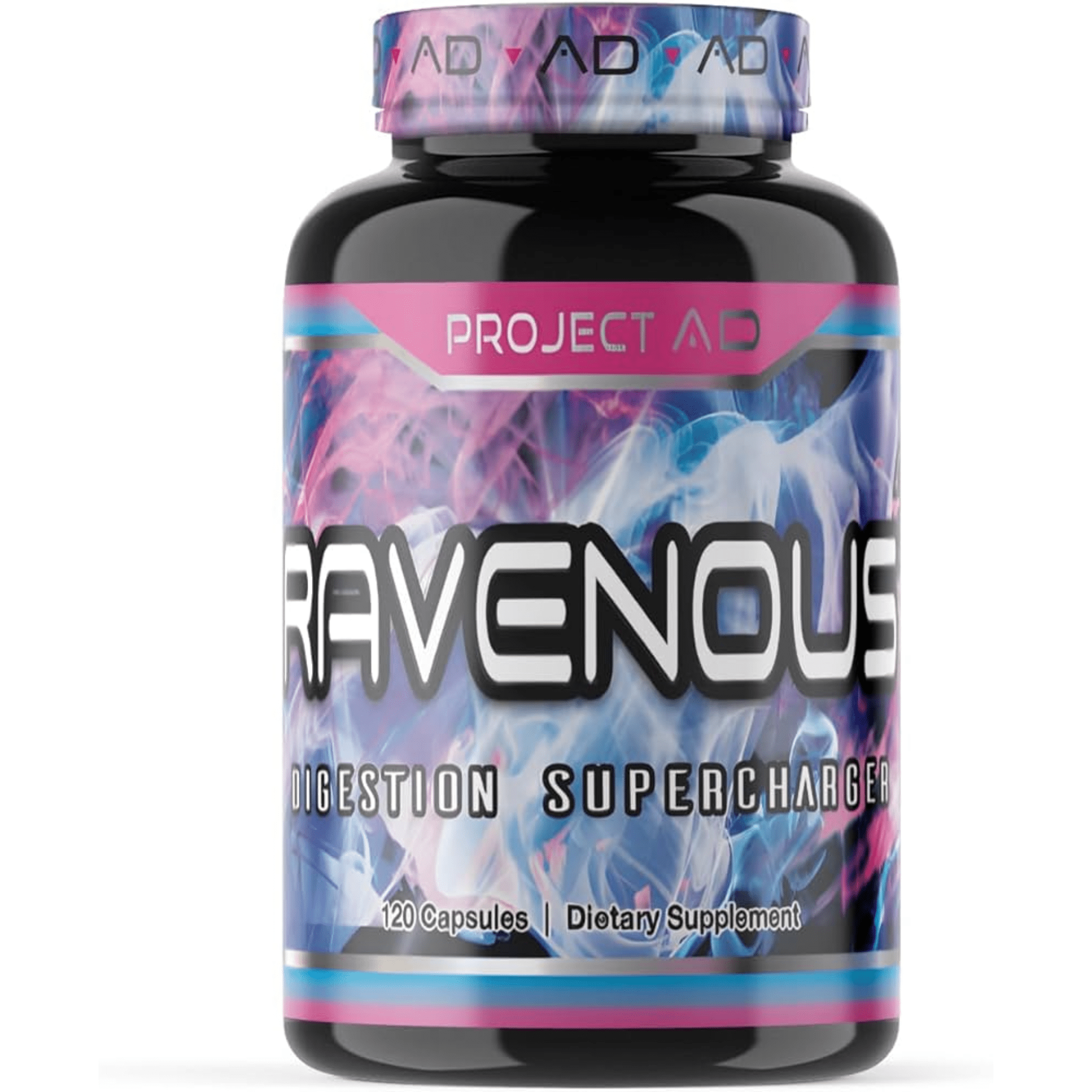
Project AD Ravenous
Almost everything on our shelves is for people trying to eat less. Ravenous is for the opposite problem — the hard gainer who has to force food down, and for whom eating enough is genuinely the hardest part of training.
It works on appetite and digestion together, taken immediately before a large meal.
How a supplement stimulates appetite: bitters
This is the mechanism and it is older and better established than most people assume.
Gentian root is the key ingredient. Gentian is one of the classic bitters — intensely bitter plants used for centuries before meals, and the reason bitter aperitifs exist as a pre-dinner tradition across Europe.
The mechanism: bitter compounds activate bitter taste receptors in the mouth and gut, and that activation triggers a cascade of digestive secretions — gastric acid, bile, and pancreatic enzymes. Your digestive system prepares itself for food.
The practical effect for a hard gainer is twofold. A primed digestive system empties more efficiently, so you feel less like the previous meal is still sitting there — which is usually the actual barrier to eating more. And the secretion response is associated with the sensation of hunger itself.
This is not a hormone or a stimulant. It is the same reason a bitter drink before dinner makes you hungrier, delivered in a capsule.
Triphala, which nobody names
Three of the herbal ingredients are harad (chebulic myrobalan), amla, and behada (belleric myrobalan).
Those three fruits together are Triphala — one of the oldest and most widely used formulations in Ayurvedic medicine, traditionally used for digestion and regularity. Every listing for this product names the three fruits individually; none of them mention that they constitute a formulation with two thousand years of traditional use behind it.
Alongside them: ginger and peppermint, both with genuine evidence for gastric comfort and motility, licorice root, and black pepper extract for absorption.
The enzyme complex
The enzyme blend is unusually complete: acid protease, fungal proteases I and II, bromelain and papain for protein; amylase, maltase, invertase and cellulase for carbohydrates and plant fibre; lipase for fats; and lactase for dairy sugar.
Cellulase is worth pulling out — humans do not produce it, and it breaks down the plant cellulose we otherwise cannot digest. That is a common source of gas and bloating on a high-volume diet.
The formula also includes betaine HCl and pepsin, which supply stomach acid and a protein-digesting enzyme directly, rather than stimulating your own production.
⚠ Important cautions
Betaine HCl and pepsin add stomach acid. If you have an ulcer, gastritis, or take a proton pump inhibitor or H2 blocker for reflux, do not take this without speaking to your doctor. Adding acid while on medication designed to suppress it is working against yourself, and it can be genuinely uncomfortable.
Never take it away from a meal. This is on Project AD's own label and it matters — betaine HCl and pepsin on an empty stomach are unpleasant. Take it immediately before food, every time.
If your bottle lists cascara sagrada: it is a stimulant laxative. Short-term occasional use is one thing; regular daily use can lead to electrolyte disturbance and bowel dependency. The FDA removed it from OTC laxative status in 2002. Read your label, and do not use this product long-term without a break if it is present.
Specs
| Serving size | 2 to 3 capsules before a large meal |
| Maximum | 6 capsules in 24 hours |
| Bitters | Gentian root |
| Herbal blend | Harad, amla, behada (Triphala), ginger, peppermint, licorice, black pepper |
| Enzymes | Proteases, bromelain, papain, amylase, maltase, invertase, cellulase, lipase, lactase |
| Digestive acids | Betaine HCl, pepsin |
| Capsule | Gelatin — not vegetarian |
| Colours | Contains FD&C Yellow #6 and Red #3 |
How to take it
- Two to three capsules with water, immediately before a calorie-dense meal.
- One to two capsules before smaller meals if general digestive support is the goal.
- Never more than six in 24 hours.
- Only ever with food. Not fasted, not between meals.
- Use it on the meals that are hardest. Most people struggle with one or two specific meals rather than all of them. Target those rather than every meal.
Who this is for
- Hard gainers who genuinely cannot eat enough — the people for whom appetite, not training, is the limiting factor
- Anyone bulking who has hit the wall on food volume
- People who feel uncomfortably full for hours and cannot face the next meal
- Anyone eating a very high-protein diet where digestion is under real load
- People whose appetite drops when training volume is high, which is common and counterintuitive
Who this is not for
Anyone with an ulcer, gastritis, reflux, or on acid-reducing medication. Speak to your doctor. The betaine HCl and pepsin work against that.
Anyone under 18, pregnant or nursing.
Not vegetarian — the capsule is gelatin.
If artificial colours matter to you, this contains FD&C Yellow #6 and Red #3.
And the honest one: if you can eat enough, you do not need this. Appetite stimulation is only useful when appetite is the actual bottleneck. If you are simply not eating enough because you have not planned meals, the answer is planning meals — and a calorie-dense drink is cheaper. CarboMax mixed into a protein shake adds several hundred calories you can drink rather than chew, which solves the same problem from the other direction.
Stack it with: liquid calories. Ravenous helps you eat more; a gainer shake means you have to eat less to get there.
Frequently asked questions
How does it increase appetite?
Through bitters, principally gentian root. Bitter compounds activate bitter receptors in the mouth and gut, triggering the release of gastric acid, bile and pancreatic enzymes. That prepares the digestive system for food and is associated with the sensation of hunger — the same reason a bitter aperitif before dinner works.
When should I take it?
Two to three capsules with water immediately before a calorie-dense meal. Never on an empty stomach, and never more than six capsules in 24 hours.
Can I take it if I have reflux or take a PPI?
Speak to your doctor first. This contains betaine HCl and pepsin, which add stomach acid — the opposite of what acid-reducing medication does.
What is Triphala?
The combination of harad, amla and behada — three fruits used together as one of the oldest formulations in Ayurvedic medicine, traditionally for digestion and regularity. All three are in this formula.
Will it help with bloating?
The enzyme complex, particularly cellulase and lactase, targets common causes of gas and bloating. Cellulase breaks down plant fibre humans cannot digest unaided.
Is it vegetarian?
No. The capsule is gelatin.
Can I use it every day?
Within the six-capsule daily limit, yes. If your bottle lists cascara sagrada, take periodic breaks — it is a stimulant laxative and continuous use is not advisable.
Do I need it if I can already eat enough?
No. This solves appetite as a bottleneck. If eating enough is a planning problem rather than an appetite problem, liquid calories are cheaper and simpler.
Customers praised this appetite and digestion support supplement for helping them maintain consistent eating schedules. Shoppers reported eating "every 2-3 hours" and found meals "always go down smoothly." The digestive enzymes prevent bloating while boosting appetite. One customer called it "hands down best product ever!" Highly rated for effectiveness.
- 5 stars: 6 (86%)
- 4 stars: 1 (14%)
- 3 stars: 0 (0%)
- 2 stars: 0 (0%)
- 1 star: 0 (0%)
Project AD - Ravenous
It’s hard sometimes to get 6 meals in a day but with Ravenous the meals always go down smoothly.
I was very skeptical about this product because it said for those “who gain fat easily” and I don’t gain weight easily. I am trying to gain weight and I do struggle with eating because I don’t get much of an appetite through out the day. On days I do not take this, I could go 5-6 hours before my next meal. With this, it’s like clock work. I eat every 2-3 hours! Best part is, the digestive enzymes keep me from feeling bloated. So instead of spending money separately on D.E., I have everything I need in this pill!
Project AD - Ravenous
Best pump product on the market AD always had the best formulated products
Project AD - Ravenous
During the peak of my improvement season, Ravenous gives me the extra edge in my appetite and aids in my digestion to keep my caloric intake high and my digestion running smoothly.
You may also like
Recently viewed
- Opens in a new window.