


Description
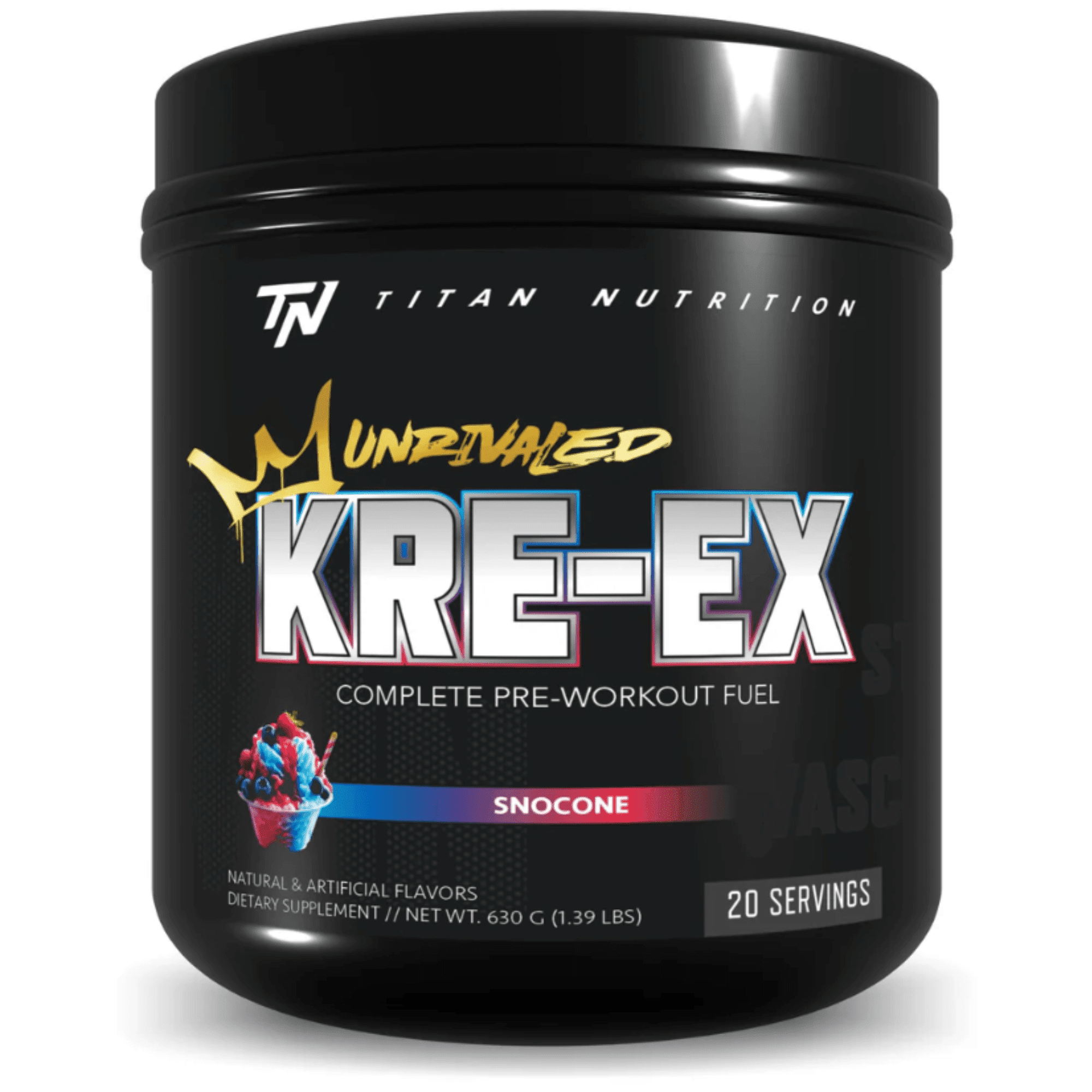
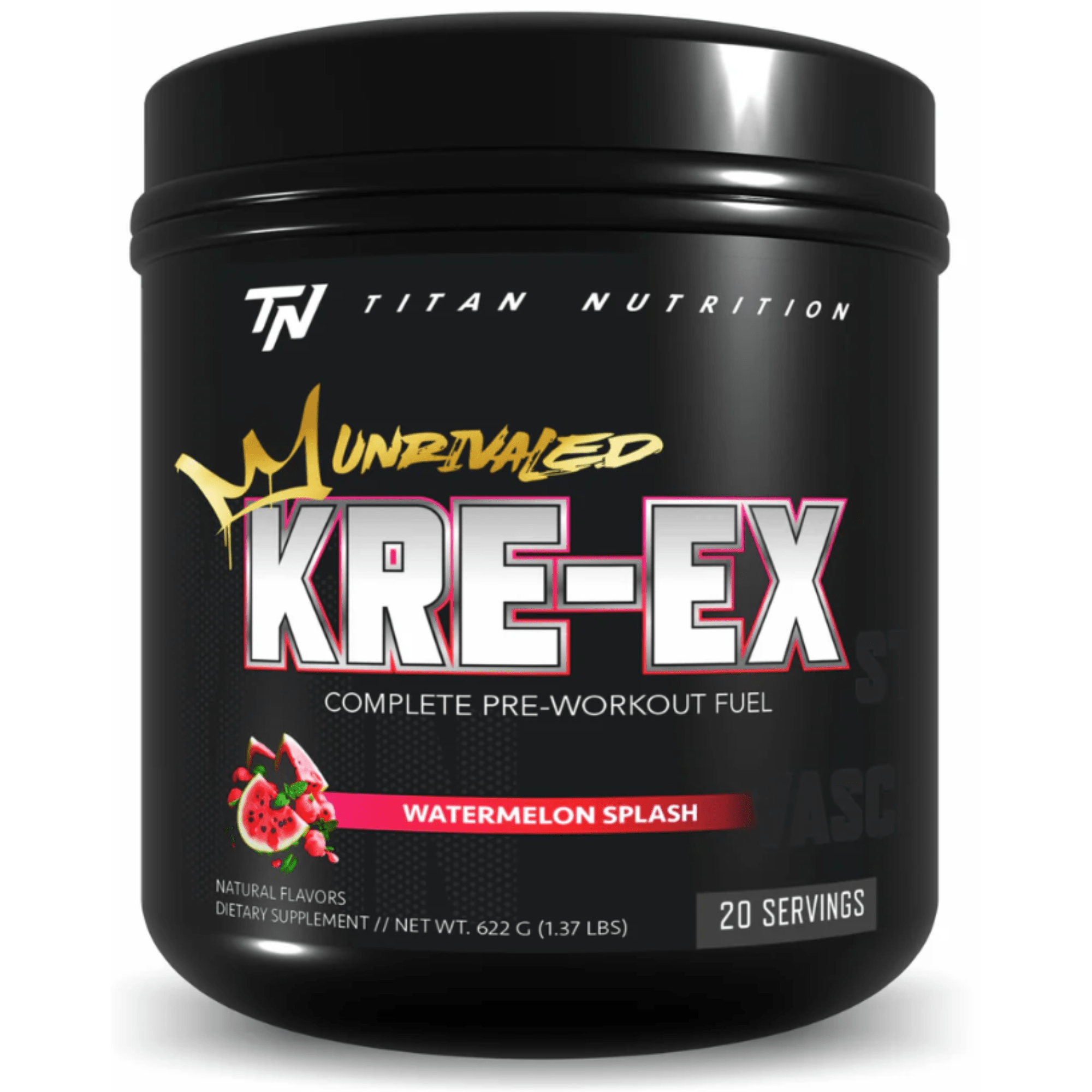
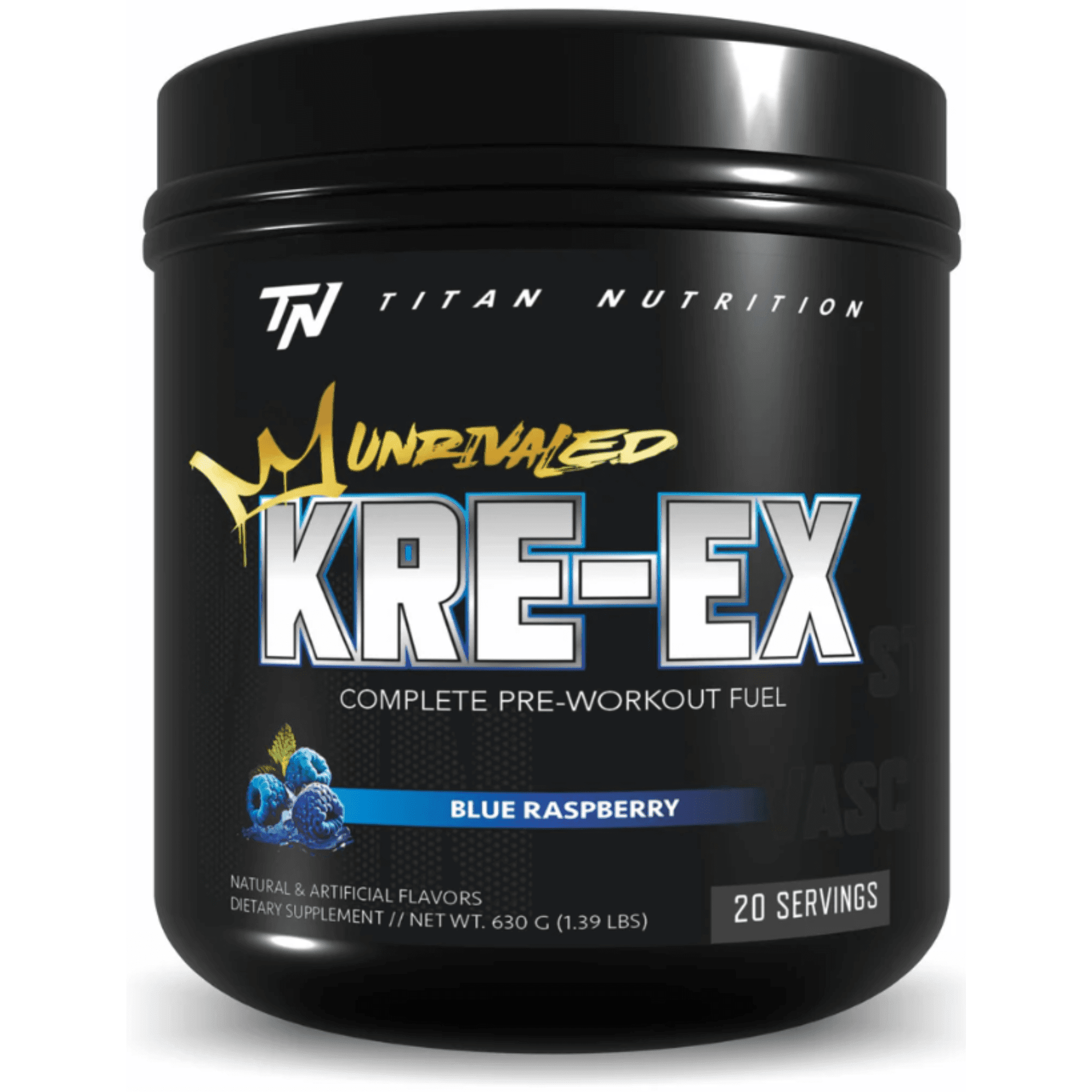
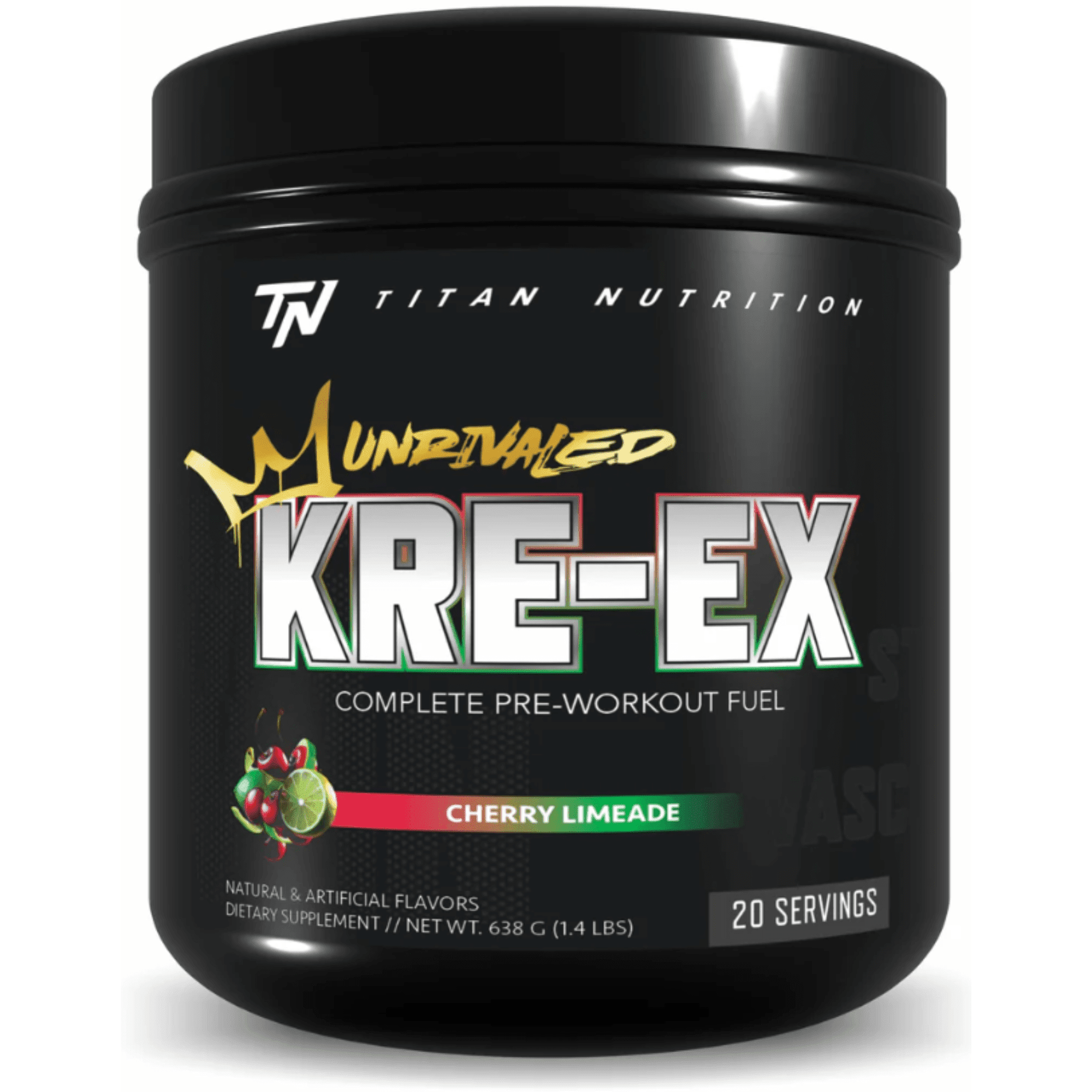
Titan Nutrition Kre-Ex
A pre-workout formula built around creatine alongside energy and performance ingredients.
⚠ The most important thing about any creatine pre-workout
This one detail determines whether the creatine in your tub does anything, and most people get it wrong.
Creatine works by saturating muscle stores. You are filling a reservoir, and it stays full through daily intake — not through training.
Which creates a problem with pre-workout creatine: if you only take your pre-workout before training, you are missing creatine on every rest day. Over a week that is two or three missed doses, and saturation drifts down.
The fix is straightforward:
- Check how much creatine is in a serving. If it is a full 5g, you can take a serving on rest days too — or simply take separate creatine on those days
- If it is under 5g, top up with standalone creatine daily and treat what is in here as a contribution
- Either way, take creatine every day, including rest days
Timing genuinely does not matter — before, after or unrelated to training makes no meaningful difference. What matters is that you take it daily.
Why creatine belongs in a pre-workout at all
Convenience, mostly — and that is a legitimate reason.
Creatine is the single most researched supplement in sports nutrition, with hundreds of human studies behind it and consistent findings for strength, power and lean mass. Having it in a product you already take removes a step.
How it works: creatine is stored as phosphocreatine, which donates a phosphate group to regenerate ATP during short, intense efforts. ATP is your immediate energy currency and you hold only seconds' worth — phosphocreatine refills it fastest.
Which is why the effect shows up in heavy sets and repeated maximal efforts rather than endurance work: an extra rep or two on a heavy set, better recovery between sets, and over months that volume becomes more strength and more muscle.
How to read the rest of the label
The checks that work on any pre-workout:
- Creatine: how much, and which form? 5g of monohydrate is the standard. Monohydrate remains the benchmark — no alternative form has convincingly beaten it, and it costs the least
- Citrulline: pure or malate? Malate is roughly a third malic acid, so 8g of malate delivers about 5.3g of actual citrulline. The researched range is 6 to 8g of actual — see our L-Citrulline page
- Beta-alanine should be 3.2g. The tingle is paraesthesia — harmless, fades with use, and tells you nothing about efficacy
- Betaine should be 2.5g if present
- Total caffeine, counted against 400mg daily including coffee
- Any proprietary blend? If so, none of the above is checkable
⚠ Water weight, bloating, and bloodwork
Creatine draws water into muscle cells. That is part of how it works — it acts as an intracellular osmolyte, and cell volumisation is itself associated with growth.
What it is not is subcutaneous bloating. The water goes into the muscle rather than under the skin, so the effect is fuller muscles rather than a softer appearance.
⚠ And one thing to tell your doctor: creatine raises serum creatinine, a blood marker used to estimate kidney function. That is a supplementation artefact rather than damage — but it can look alarming on a panel, and people have been sent for unnecessary investigation. Mention that you take creatine before any bloodwork.
Specs
| Type | Creatine-containing pre-workout |
| ⚠ Key point | Creatine needs daily intake, including rest days |
| ⚠ Check | Creatine dose and form, plus total caffeine |
How to take it
- 20 to 30 minutes before training, in 8 to 12oz of water.
- Start with half a scoop if it is new to you.
- ⚠ Take creatine on rest days too — either a serving of this, or standalone creatine.
- Not within six hours of bed.
- Drink enough water, since creatine draws it into muscle cells.
- Give it three to four weeks to reach saturation. No loading needed.
Who this is for
- Anyone who wants creatine and a pre-workout in one product
- People who would otherwise forget creatine entirely
- Anyone training in the morning or early afternoon
- People who want fewer separate products to manage
Who this is not for
Anyone who will only take it on training days. That misses creatine on every rest day, which undermines the point.
Anyone already taking standalone creatine, without checking the combined total.
Anyone training in the evening.
Anyone caffeine sensitive, or already drinking several coffees a day.
Anyone with high blood pressure, a heart condition or anxiety, without speaking to a doctor.
Speak to your doctor first if you have a kidney condition.
Tested athletes should check the panel against their federation's list.
Not for anyone under 18, pregnant or nursing.
Stack it with: standalone creatine for rest days — that is the missing piece with any creatine pre-workout.
Frequently asked questions
Do I need creatine on rest days?
Yes, and this is the key point with any creatine pre-workout. Creatine works by saturation maintained through daily intake, so training-day-only use means missing two or three doses a week.
Does creatine timing matter?
No. Before, after or unrelated to training makes no meaningful difference — daily consistency is what matters.
How much creatine should be in it?
5g of monohydrate is the standard dose. If your tub has less, top up with standalone creatine.
Which creatine form is best?
Monohydrate remains the benchmark — no alternative has convincingly beaten it, and it costs the least.
Do I need to load creatine?
No. A standard daily dose reaches the same saturation within three to four weeks without the stomach upset loading can cause.
Will it make me look bloated?
No. The water goes into muscle cells rather than under the skin, so the effect is fuller muscles.
Will it affect my bloodwork?
Creatine raises serum creatinine, which is used to estimate kidney function. That is an artefact of supplementation — tell your doctor you take it.
Why does it make me tingle?
Beta-alanine, if present — harmless paraesthesia that fades with regular use.
You may also like
Recently viewed
- Opens in a new window.