

Description
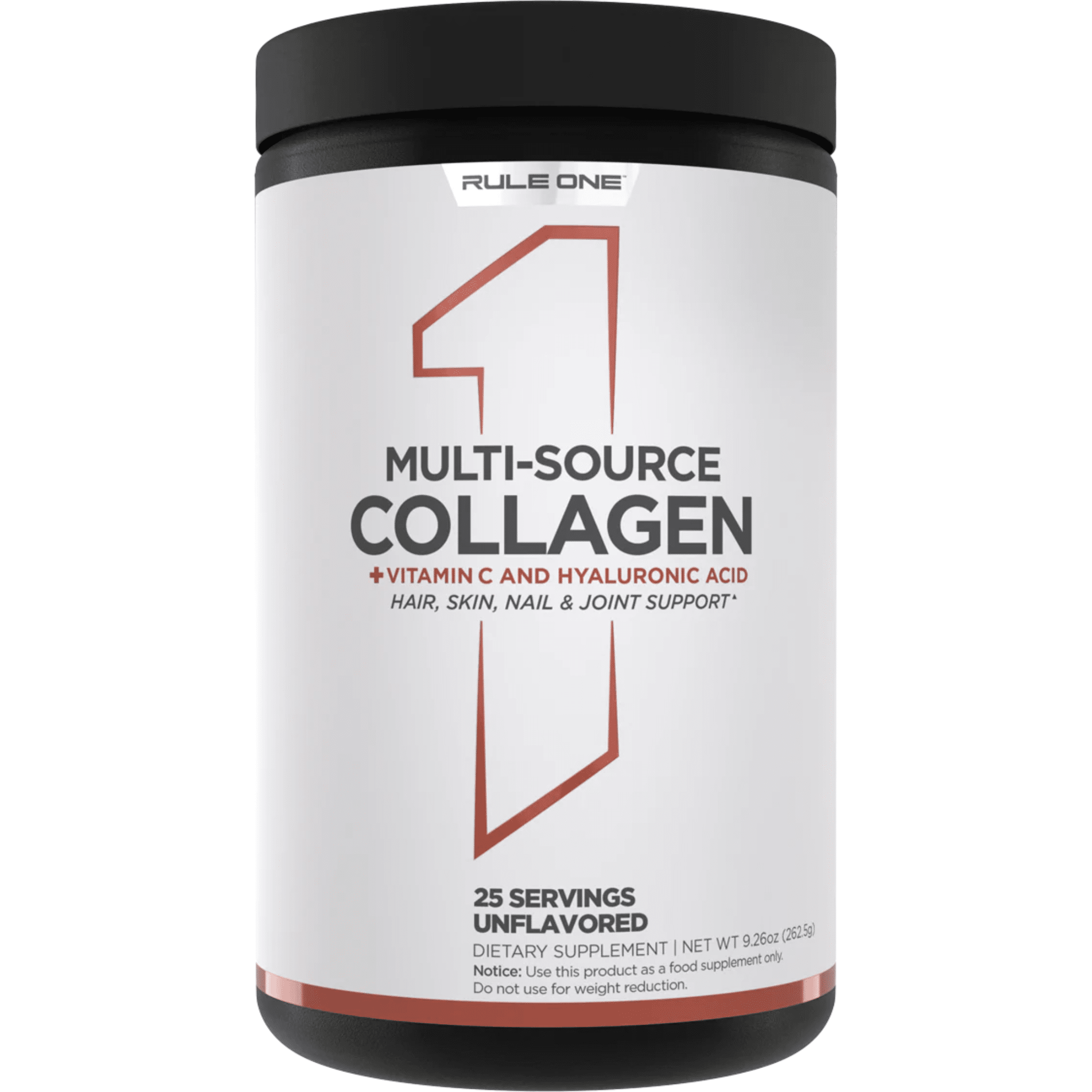
Rule One Multi Source Collagen
Hydrolysed collagen drawn from several different sources, supplying multiple collagen types rather than one.
Why multiple types is a real distinction
Collagen is not a single substance. There are dozens of types in the human body, and different types predominate in different tissues:
| Type I | The most abundant by far | Skin, bone, tendon, ligament |
| Type II | The joint-relevant one | Cartilage |
| Type III | Usually alongside Type I | Skin, blood vessels, organs |
| Type V | Smaller structural role | Cell surfaces, hair, placenta |
| Type X | Bone formation | Cartilage, bone development |
And each source supplies different types:
- Bovine — Types I and III. The most common source
- Marine (fish) — Type I, and generally the smallest peptide size
- Chicken — Type II, which is the cartilage one
- Eggshell membrane — Types I, V and X
So a single-source collagen covers a narrower range than a multi-source one. If your interest is skin, a bovine or marine Type I product is sufficient. If joints are the priority, Type II from chicken is the relevant one — and a bovine-only product will not supply it.
⚠ Which means allergens vary by source. Marine collagen means fish; eggshell membrane means egg. Check the panel.
How collagen actually works — the honest version
Collagen is sold with a very intuitive story: eat collagen, get collagen in your skin and joints. That is not how it works, and the real explanation is more interesting.
Collagen is a protein. Like every protein you eat, digestion breaks it into amino acids and short peptides. Those do not travel to your knees and reassemble as cartilage.
So why does the research show effects at all? Two plausible reasons:
- An unusual amino acid profile. Collagen is exceptionally rich in glycine, proline and hydroxyproline — amino acids that are relatively scarce in ordinary dietary protein but used heavily in building connective tissue
- Signalling peptides. Certain small collagen peptides do appear to survive digestion intact, and research suggests they may act as a signal to fibroblasts — the cells that produce collagen — effectively telling them to make more
That second mechanism is why hydrolysed collagen is used rather than gelatin: hydrolysis breaks it into the specific peptide sizes the research has focused on.
⚠ Vitamin C is not optional
Vitamin C is a required cofactor for the enzymes that hydroxylate proline and lysine during collagen synthesis. Without adequate vitamin C, collagen synthesis fails — which is precisely what scurvy is.
That is settled biochemistry rather than a marketing pairing. Take collagen with a vitamin C source, or the raw material has nothing to build with. Our Vitamin C page covers the dosing.
⚠ Collagen is not a complete protein
This needs saying plainly, because collagen is frequently sold in protein tubs.
Collagen lacks tryptophan entirely and is low in several other essential amino acids — including leucine, the one that triggers muscle protein synthesis.
So do not count collagen toward your daily protein target. It will not support muscle growth, and a product marketing it as protein powder is not doing the same job. Use whey isolate for that.
Multi-source or single-source?
| Multi Source Collagen | Several types | Broader coverage — skin and joints |
| Collagen Peptides | Typically Type I and III | Skin-focused, usually cheaper |
Our honest guidance: if skin, hair and nails are your interest, a straightforward Type I and III product does the job and costs less. Choose multi-source if joints are part of why you are buying, since Type II is the cartilage collagen and single-source bovine products do not contain it.
Specs
| Collagen | Hydrolysed peptides, multiple types |
| Sources | Multiple — check the panel |
| ⚠ Allergens | Depends on sources — check for fish and egg |
| Counts as protein? | No — incomplete protein |
How to take it
- Daily and consistently, for eight to twelve weeks before judging it.
- With a vitamin C source — a genuine requirement.
- About an hour before training if tendon or joint support is the goal.
- Mixes into hot or cold liquid without gelling.
- Do not count it toward your protein target.
Who this is for
- Anyone whose interest spans both skin and joints
- People with joint discomfort, where Type II is the relevant collagen
- Lifters with accumulated connective tissue wear
- Older adults, since collagen synthesis declines with age
- Anyone who would rather one product than two
Who this is not for
Anyone interested only in skin. A single-source Type I and III product does that job and costs less.
Anyone counting it toward protein. Collagen is incomplete — no tryptophan, low leucine.
Vegans and vegetarians — all collagen is animal-derived.
Anyone with a fish or egg allergy, depending on the sources used. Check the panel.
Anyone with a genuine injury — see a physiotherapist.
Not for anyone under 18 without medical advice.
Stack it with: vitamin C, and fish oil for the anti-inflammatory side of joint support.
Frequently asked questions
Why do multiple collagen types matter?
Different types predominate in different tissues — Type I in skin, bone and tendon; Type II in cartilage; Type III alongside Type I. A single-source product covers a narrower range.
Which type is best for joints?
Type II, which comes from chicken sources. A bovine-only collagen will not supply it.
Which type is best for skin?
Type I, from bovine or marine sources — usually alongside Type III.
Should I buy multi-source or single-source?
Single-source if skin, hair and nails are your only interest — it costs less. Multi-source if joints are part of why you are buying.
Do I need vitamin C with it?
Yes. It is a required enzymatic cofactor for collagen synthesis rather than an optional pairing.
Does it count as protein?
No. Collagen lacks tryptophan and is low in leucine.
What allergens should I check for?
Marine collagen means fish, and eggshell membrane means egg. Check the panel against your sources.
How long before I see results?
Eight to twelve weeks, in line with most clinical trials.
You may also like
Recently viewed
- Opens in a new window.